Issue Nineteen

0

Trauma-Informed Pedagogy in the Digital Media Pandemic Classroom

Abstract

After CUNY suspended in-person instruction during the COVID-19 pandemic, I started teaching a half-semester long digital media production course. Rapidly migrating a digital media production course to remote learning creates problems specific to our software-based classrooms, as many of our students lack access to the fixed technology used in the course. As I negotiated these problems, I sought first and foremost to reduce the harm this course would cause my stressed students. To promote care, and minimize harm, I made several decisions that prioritized students’ needs and limits, without sacrificing the rigor that would prepare them for the subsequent courses in the program. These decisions included: delivering asynchronous lessons via Blackboard with flexible assignment deadlines and using two Adobe web app clones, Photopea, and Designer.io, rather than Adobe software itself. This essay articulates these decisions as a trauma-informed pedagogy of care. This theoretical framework builds on feminist ethics of care, public health principles of harm reduction, and social welfare’s trauma-informed practice. This approach allowed me to destigmatize illness and late assignments, and reduce the stress that this course would have on the already traumatized lives of my students, colleague, and myself.

As the COVID-19 pandemic took hold of New York City, the City University of New York moved all of its courses online. One of my courses was a half-semester-long digital media arts course which was scheduled to begin in the middle of March, after the transition to distance learning. As I converted the course, I made several key decisions that prioritized students’ needs and limits, and minimized complexity. Because I knew many of my students wouldn’t have access to fixed technology, I used two Adobe web app clones, Photopea and Designer.io, rather than Adobe software itself. Anticipating that COVID-19 would prevent students from participating consistently, I taught the course through asynchronous lessons, with a flexible timeline. Despite Blackboard’s many problems (Lapowsky 2015), I used it because I knew my students’ other classes would use this official CUNY platform and I didn’t want them to learn anything new or to remember any extra passwords.

In all of these decisions, I sought first and foremost to reduce the harm this course would cause my stressed students. In that mid-March moment, all signs indicated that this recently-designated pandemic would get really bad, and I didn’t want this class to make it worse. I balanced two competing pedagogical principles: the imperative to make this process as easy as possible and not produce unnecessary stress for the students, the other adjunct instructor who would be using my materials, and for myself; and the need to ensure that the students actually learned the material well enough that they would be able to succeed in the courses that follow this class. Or to put it more bluntly: I tried to prioritize care and reduce harm, without sacrificing rigor. The approach seemed to work, as more students successfully completed the class than during a regular semester.

In this essay I will articulate a theoretical framework for how I was thinking about these decisions as I made them and how I have come to understand these decisions in retrospect. At the time, I framed my pedagogical choices through a feminist lens as decisions about care and harm. Additionally, my familiarity with harm reduction principles gave me a loose framework to assess my decisions, destigmatizing illness and late assignments, and reducing the stress that this course would have on the already traumatized lives of my students, colleague, and myself. In retrospect, I will frame these decisions through trauma-informed pedagogy, a practice I only recently learned of.

Care and Harm

In recent years, many differently motivated organizations, movements, and individuals have deployed or theorized discourses of care, caregiving, and self-care. Just weeks before the pandemic took hold, both Social Text and The Sociological Review published special issues on radical care (Hobart and Kneese 2020; Silver and Hall 2020). Writing in the intro to Social Text, Hi‘ilei Julia Kawehipuaakahaopulani Hobart and Tamara Kneese juxtapose these competing claims:

On the one hand, self-care is both a solution to and a symptom of the social deficits of late capitalism, evident, for example, in the way that remedies for hyperproductivity and the inevitable burnout that follows are commoditized in the form of specialized diets, therapies, gym memberships, and schedule management. On the other hand, a recent surge of academic interest in care … considers how our current political and sociotechnical moment sits at the forefront of philosophical questions about who cares, how they do it, and for what reason.

Care means something very different for childcare worker advocates and Gwyneth Paltrow’s Goop brand. Of course, COVID-19 only further exacerbated these tensions between corporate carewashing and the strain on essential care workers (Chatzidakis et al. 2020).

Care has an extended relationship to pedagogy. Nel Noddings articulated the feminist ethics of care philosophy to argue that care is a core element and value in pedagogical relationships between teachers and students (Noddings 1984). Her pedagogy of care has been very influential, especially in early childhood education, and has also been critiqued for its gender essentialism (Monchinski 2010). Others have explored the ways in which the theory would need to be transformed to be applicable to online education, with its shifts in contexts and relationships (Rose and Adams 2014).

My own engagement with care comes out of my work on Art+Feminism, an international community that strives to close the information gap about gender, feminism, and the arts on Wikipedia. Taking inspiration from Audre Lorde’s statement that “Caring for myself is not self-indulgence, it is self-preservation, and that is an act of political warfare” (Lorde 1988), we design our events to support our participant’s minds, bodies, and psyches. We do this by constructing welcoming and accessible trainings, providing food and childcare at our events, and by maintaining a friendly spaces policy (Evans, Mabey, and Mandiberg 2015). We do this because we know that activism takes physical and emotional energy and is often met with resistance. We seek to care for the participants and to reduce the potential of any harm that may come to them (Tamani et al. 2020).

My work with Art+Feminism has caused me to think a lot about how to reduce the harm that our participants experience. It may be unconventional, but in that intense moment in March, I used my admittedly surface level understanding of harm reduction as a loose framework to assess my decisions. Originally articulated during the 1980’s HIV epidemic to describe needle exchanges, harm reduction is a public health theory that eschews an abstinence-only approach to risk and disease in favor of practices that minimize negative outcomes (Des Jarlais 2017). To be clear, I am in no way equating taking a digital media course in a pandemic with opioid addiction; the concept of harm reduction can be implemented in different circumstances. While harm reduction remains most frequently discussed in terms of drug and alcohol addiction or sex education, society has widely adopted many other harm reduction strategies: seat belt laws and rest stops reduce traffic deaths endemic to automotive travel; hard hats, bicycle, motorcycle, hockey and football helmets reduce serious brain injuries; life vests and fences around pools help prevent drowning; and sunscreen mitigates the danger of skin cancer inherent in being outdoors (UNAIDS 2017). During the pandemic, societies have encouraged social distancing, hand washing, and wearing masks to help reduce the likelihood of contracting COVID. These are forms of harm reduction: we accept that it is not possible for most people to completely abstain from interacting with other people and, for those that continue this inherently risky behavior, certain practices can help reduce the potential for physical harm (Kutscher and Greene 2020). Of course, these measures have not mitigated the pandemic’s significant mental health impact (Choi et al. 2020; Abbott 2021).

While it may be unconventional to apply harm reduction principles to the mental health impacts of the pandemic classroom, a small number of practitioners have discussed applying harm reduction principles to mental health (Krausz et al. 2014). While writing this essay I learned about social welfare’s use of trauma-informed practice to provide services that are sensitive to their clients’ traumatic histories. Trauma-informed practice is built around five principles: ensuring safety, establishing trustworthiness, maximizing choice, maximizing collaboration, and prioritizing empowerment (Fallot and Harris 2001). Educators have adapted these principles into a trauma-informed pedagogy in K–12 education (Thomas, Crosby, and Vanderhaar 2019), and more recently in post-secondary education—first in social welfare (Carello and Butler 2015), and to other disciplines in the wake of the pandemic (Imad 2020). At their core, these practices seek to minimize the potential for retraumatization and maximize students emotional and cognitive safety.

While I was motivated by discourses of care and harm, trauma is probably a more precise definition. I always enter the classroom with the knowledge that my students have already experienced trauma, as people living in an unequal society, whose divisions, imbalances and punishments are marked by the intersections of race, gender, and class. I knew that many of my students would be physically vulnerable, and the rest would be economically vulnerable. Most of my students hold jobs, many of which are full time. I knew that most of my students either work in parts of the service sector that would be deemed essential or in retail jobs that would be laid off or furloughed. They live at home with their parents, who are similarly vulnerable.

Thus, as I redesigned the course, I centered care by reducing the potential for harm and trauma that this course might cause my already traumatized students. I knew that the COVID-19 crisis would amplify and transform a task that would have previously been a productive challenge into a debilitating barrier to completing an assignment or the course. We had to get our way through the semester amidst a public health crisis, and I wanted to make sure I removed as many barriers as possible and reduced the stress that this course would have on my students, colleagues, and myself.

Digital Foundations Online

COM 115 Introduction to Media Environments is a one-credit, 7 ½-week course that introduces students to the basics of digital media production. It is required of all students in the Communications major at the College of Staten Island and is the prerequisite for all courses in the Design and Digital Media specialization. COM 115 is the only course in our program with a standardized syllabus used across all sections and instructors. I typically teach two to three sections a year, while the other six to eight sections are taught by adjunct faculty. During the second half of the Spring 2020 semester there was only one other section, taught by an adjunct instructor.

I developed the course alongside the Digital Foundations textbook I co-authored with xtine burrough (burrough and Mandiberg 2008) and maintain the wiki version of Digital Foundations, which is kept up to date with Adobe software releases. Like Digital Foundations, COM 115 integrates historical examples and the design principles of the Bauhaus into an introduction to digital media production. For example, in COM 115 students use the Josef Albers color theory exercises in order to understand the Color Picker tool, integrating history, aesthetics, and technique in the same lesson. While the course emphasizes design principles and techniques over software training, the class does function as the “Intro to Adobe” for our department. The Adobe Creative Cloud has developed a monopoly on design and digital imaging software in the creative industries and in the classrooms of students who aspire to enter those industries. Like all monopolies, Adobe extracts a hefty price—one that has become more unavoidable since they shifted to a subscription-only model.

In March, faculty from across CUNY converged on the usually quiet Media, Arts, and Technology Discipline Council group on the Academic Commons to participate in a thread titled “Moving production courses online for COVID // the Adobe problem.” Though media arts courses are well suited for online delivery, rapidly migrating a digital media production course to remote learning creates problems specific to the tools and techniques used in our software-based classrooms. This is not just a problem for this course, or for all digital media arts instructors, but for all courses that rely on fixed technology—especially those at underfunded public institutions like CUNY with students who have difficulty accessing fixed technology (Andre Becker, Bonadie-Joseph, and Cain 2013; Smale and Regalado 2017); as opposed to mobile technology like smartphones, fixed technology refers to desktop computers, printers, and other resources that are often only available to our students in computer labs.

My own experience piloting an online version of the class in 2012 confirmed this challenge. Because of a failure in the CUNY First registration software, very few of the students realized they were registering for an online course. Roughly half of the students dropped the class, and many of those that remained struggled to succeed because they were unable to access the necessary Adobe software. I made my decisions to ensure my students would not experience this kind of trauma as a result of my course.

Avoiding Adobe

Two side-by-side screenshots of the Photopea and Adobe Photoshop user interfaces, with the mouse cursor hovering over the Transform menu item in the Edit menu; the Transform sub menu is almost identical in both screenshots.
Figure 1. A comparison of the nearly identical Free Transform menu options in Photopea and Adobe Photoshop.

I decided to not use Adobe software, opting instead to use two Adobe web app clones: Photopea and Designer.io. I made this decision by following my goal to prioritize care and reduce harm, without sacrificing rigor. I can say with confidence that this was the right decision.

At the time that I made the decision to use web apps, we did not know if our department’s Mac lab or the library labs would stay open—they did not. Nor did we know whether or not students would be able to access the Adobe software on their own computers—they were, because Adobe granted a special license, but we only learned this a week after the course began. I knew that if Adobe didn’t make that special license available, most of my students would not be able to secure their own copies of the software because of its subscription model’s substantial cost. Once it was made available by the school several weeks into the course, only a small percentage of the students installed it—the majority used the web apps, including all the students who came to video office hours.

Many of our students do not have easy access to fixed technology, and those that do have access to a desktop or laptop may not be comfortable installing software, nor may the computer be powerful enough to effectively run the resource intensive Adobe software. Because so many of our students lacked access to computing, CUNY made an emergency purchase of 25,000 Chromebooks and 25,000 Android tablets to ensure our students would be able to access online learning. Many of my students used these Chromebooks for the course. I chose to avoid the open source Inkscape and GIMP because of the difficulty of installing software, because of the uncertainty about the capabilities of the Chromebooks, and because their interfaces diverge from the Adobe software more than the two web apps.

Two side-by-side screenshots of the Designer.io and Adobe Illustrator user interfaces, with the mouse cursor clicking on the Shape Tool, showing the tool options; the tool icon and options are similar, but not identical, and they are located in different areas of the interface.
Figure 2. A comparison of the Shape Tool in Designer.io and Adobe Illustrator.

The user interface for Photopea is almost identical to that of Photoshop, and Designer.io follows the principles of Illustrator though its interface diverges more. In Photopea, the menu item names are almost all exactly the same, in the same place, with almost identical iconography; in Designer.io the tools are very similar, if located in slightly different places. Photopea even exports the PSD format with layers. They aren’t exactly identical: for example, Designer.io a has a slightly different pathfinder tool, and intermediate tools such as unsharp mask are missing in Photopea. Neither has the kind of advanced features that the Adobe software has, but these are sufficient for an introductory class at the 100 or 200 level. Most importantly, these tools scaffold directly into using the Adobe software: the tools, menus and concepts are so similar.

Using these web apps was the right decision. I experienced very few difficulties with students getting set up to use the software, and it worked on macOS, Windows, and Chrome OS. While neither is set up for mobile use, both officially work on tablets, though they were a bit glitchy in my testing. Most importantly, I am confident that the students who will continue on to other 200-level courses in the program will be able to seamlessly move into the Adobe software.

A caveat: I cannot predict the longevity of these two websites. I couldn’t find much information about Gravit, the for-profit Canadian company that develops Designer.io. Confusingly, Photopea has a GitHub repository for “bug reports and general discussion” without any code, but “Photopea is not fully open-source.” I don’t know what their business models are nor if they have sufficient resources to continue keeping these tools up and running.

Another caveat: both Photopea and Designer.io are freemium web apps. They include advertisements, and up-sell pitches for their premium versions. Designer.io requires you to create a login. I’m conscious of the adage that “if you’re not paying for something, you’re not the customer; you’re the product being sold” (blue_beetle 2010). Working within my principles of harm and care, I felt confident that a few more ad targeting cookies were a lesser harm than not being able to access any software.

Asynchronous instructional design and learning experiences

Knowing that the pandemic was certain to destabilize my students’ lives, and their schedules, I chose to design an asynchronous course in order to prioritize care and minimize harm. I knew that some students’ lives would be completely derailed by the pandemic, but if I structured enough flexibility into the course so students could complete the assignments when their pandemic timelines allowed, I could reduce the potential that they would fail to complete the course. I used Blackboard as the platform for asynchronous videos, pairing these with video office hours during the regularly scheduled two-hour class period. As much as I detest Blackboard, I knew that my students would be using it in their other classes, and would be most comfortable there. In the best of times, I substantially but productively challenge my students when I use Wikipedia or the CUNY Academic Commons as the course platform (Davis 2012). In these worst of times, I feared a new interface would be harmful.

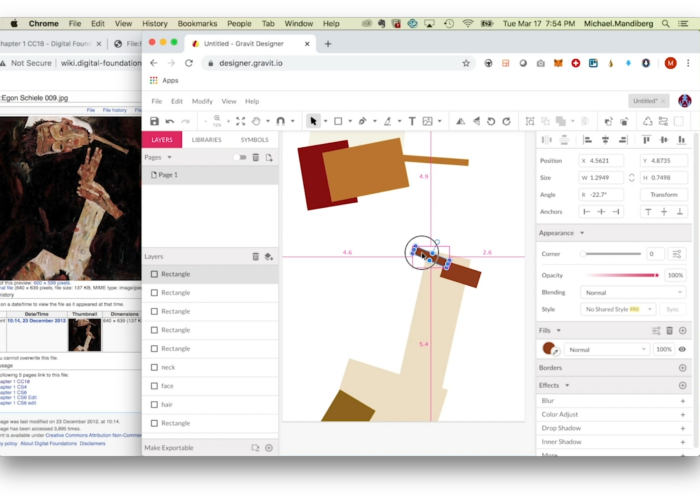
Figure 3. First video demonstration: Dynamic and Static Compositions.
Video demonstrating Mac OS computer interface, with an image of an Egon Schiele painting in a small window at the left, and a larger Gravit Designer window with a composition of rectangles based on the painting.

Using the web apps, I made video demonstrations of each of the exercises we cover from Digital Foundations. I shared these videos with my students and the adjunct instructor via a public Dropbox folder, which also includes the course syllabus, and the text of each of the assignments; additionally I posted a Study Guide in preparation for the exam. In the principle of reducing strain for everyone, including my adjunct colleague, I shared all of my assessment and communication materials via a private folder. These materials included: quizzes and exam for Blackboard; exam text and individual images; and all emails and announcements. I decided to make the weekly quizzes for practice only, rather than grading them, in an effort to lower the stakes.

Course dynamics were starkly different from teaching this in-person, or as a synchronous online course. Essentially everyone was doing their own private effort. They had almost no interaction with each other. Trauma-informed pedagogy emphasizes communication between students, collaboration, and peer support, which were entirely absent from this model (Imad 2020). And yet, they were able to finish the course. Of the fifteen students in the course, one dropped, and one never completed any assignments, but the remaining thirteen completed the majority of the assignments and all of them passed. Of these, five came to my video office hours; one student came every week, two students came every other week, and the other two popped in once. Four of the students who never came to office hours were very self-directed and highly motivated, and maybe had some previous experience with digital imaging. The remaining four who struggled and never made it to office hours made clear that they were impacted by COVID-19.

In retrospect, I recognize that I fostered the trust and safety that trauma-informed pedagogy advocates by encouraging my students to keep their video off if they wanted, which they did. During video office hours I only saw one student’s face, briefly, when they pressed the wrong button when trying to share their screen. While some of my colleagues actively complained that they couldn’t see their students, I knew my students needed privacy. They have a right to not let their classmates and their professors see the inside of their messy bedroom, or the closet, bathroom where they retreated from their other family members to get quiet and privacy. I found I was able to build rapport with the five who came to office hours despite the absence of video; and maybe I succeeded precisely because I didn’t ask them for video.

Challenges

The course was not without challenges specific to the online format and the larger pandemic context. The main instructional challenge that I faced was in demonstrating resolution. We typically do this by scanning objects; we set the resolution on the scanner and analyze the image in Photoshop. Knowing they would not have access to scanners—I didn’t even have a scanner at home—I reframed the exercise on photographic composition, with the emphasis on printing the image in multiple resolutions so they could see the different print sizes. I should have seen this coming, but I falsely assumed that they would have access to printers, so I reframed the printing process with an emphasis on taking screenshots of the print preview interface, which shows how big the print is in relationship to the paper size. There were more hiccups: the “print actual size” option is not available in the default Windows tool, something that I didn’t know because I don’t have access to a Windows computer at home, so I worked with one of the students to figure out a workaround, and she made a video demonstrating it. Unfortunately, we did not find a workaround for Chromebooks.

The larger challenge, as expected, was that half of my students were mostly disengaged from the course. At the start of the course, I told the students that the course was self-paced, but they should try to do one chapter a week, and to have the first three chapters done by halfway through the course. At the halfway mark only half of the students had completed the three chapters, and I was worried. I spent a lot of time writing them to encourage them to complete the work and relied heavily on a College of Staten Island Student Affairs COVID specific “EDUCares” team that succeeded in reaching the students I could not get engaged. EDUcares’ mandate included checking in on unresponsive students, performing a hybrid wellness check/late homework reminder. I shared a list of students who had not responded to my emails with EDUcares, and they emailed the students on their non-CUNY email addresses and/or called them at home and in some cases on their cell phones. They were able to get responses from all but one of the students and all but that one student (who never responded throughout the course) completed the first three chapters shortly after. During these exchanges I learned what I suspected: many of them did not have internet access, were without a computer until they received a CUNY loaner Chromebook, or were sharing a computer with other members of their family.

Outcomes

Certain aspects of the course (and the knowledge they produce) were simply not possible in this format: when I teach color theory in person, we spend fifteen minutes of class looking at and describing the colors of the clothes that everyone in the class is wearing. By the end of those fifteen minutes, they understand that there really is no such thing as black or white and they start to see the blues and purples in the very dark grey they previously would have called black and the yellows and oranges in the 5 percent grey that they would have called white. That simply isn’t possible to do as a group, in this online format. It isn’t really possible to do it with colors on a screen, as these are so removed from their lived experience, and each person’s screen will have a different color profile. I tried to do it with the one student who came to office hours every week, and it took us thirty minutes of one-on-one discussion—it is very strange asking a student to describe the color of the computer they are working on and persuading them that it isn’t actually dark grey, as they claim, but rather is a very low saturation dark blue.

To speak more broadly, it seems so hard to do radical pedagogy online. The software is structured around the banking model of education (Freire [1970] 2000), except instead of the human instructor at the front of the classroom depositing knowledge into the students’ presumed empty minds, it is a video of the instructor. Paolo Freire would be sad to see this (Boyd 2016). When I teach this course again, I will try to work against that as much as possible. This is one place where I might have sacrificed too much of the rigor in favor of care and reducing harm.

On the other hand, I feel like more of the students demonstrated baseline competency in the techniques that we covered. More specifically: in a typical in-person class of fifteen students, two-to-four students fall behind and never catch up because they always came twenty minutes late, missed the first class, couldn’t complete assignments on time, etc. This format alleviated some of this problem. In a typical in-person section those two-to-four students per class sit for the final exam and still fail the course, but in this format everyone who took the final passed; the only person who did not pass the course, never completed a single assignment and earned a WU (Withdrew Unofficially) grade. In this online course, the students who struggled did show their limits: in the final exam they performed better than the typical students who sit for but fail the final exam in an in-person class, but worse than the students who had steadily completed assignments throughout the course. Overall, the cohort did as well or better than most in person classes on the hands-on section of the final exam.

This was an emergency effort. None of these students expected to take an online class. My adjunct colleague and I never expected to teach one. Despite this strained context, my decisions to prioritize care in order to minimize harm helped us all get through the semester, while preparing the students to succeed in future courses. Though our classrooms will “return to normal” some point—or whatever our new normal will be—our students will carry the trauma of this pandemic. I hope to continue this trauma-informed pedagogy of care, finding a new balance between reducing harm and maintaining rigor in what will hopefully be a less traumatic post-pandemic teaching environment.

Bibliography

Abbott, Alison. 2021. “COVID’s Mental-Health Toll: How Scientists Are Tracking a Surge in Depression.” Nature 590, no. 7845: 194–95. https://doi.org/10.1038/d41586-021-00175-z.

Andre Becker, Danielle, Ingrid Bonadie-Joseph, and Jonathan Cain. 2013. “Developing and Completing a Library Mobile Technology Survey to Create a User-Centered Mobile Presence.” Library Hi Tech 31, no. 4: 688–99. https://doi.org/10.1108/LHT-03-2013-0032.

blue_beetle. 2010. “User-Driven Discontent.” MetaFilter (blog). August 26, 2010. https://www.metafilter.com/95152/Userdriven-discontent#3256046.

Boyd, D. 2016. “What Would Paulo Freire Think of Blackboard: Critical Pedagogy in an Age of Online Learning.” The International Journal of Critical Pedagogy 7.

burrough, xtine, and Michael Mandiberg. 2008. Digital Foundations: Intro to Media Design with the Adobe Creative Suite. Berkeley: New Riders in association with AIGA Design Press.

Carello, Janice, and Lisa D. Butler. 2015. “Practicing What We Teach: Trauma-Informed Educational Practice.” Journal of Teaching in Social Work 35, no. 3: 262–78. https://doi.org/10.1080/08841233.2015.1030059.

Chatzidakis, Andreas, Jamie Hakim, Jo Littler, Catherine Rottenberg, and Lynne Segal. 2020. “From Carewashing to Radical Care: The Discursive Explosions of Care during Covid-19.” Feminist Media Studies 20, no. 6: 889–95. https://doi.org/10.1080/14680777.2020.1781435.

Choi, Kristen R., MarySue V. Heilemann, Alex Fauer, and Meredith Mead. 2020. “A Second Pandemic: Mental Health Spillover From the Novel Coronavirus (COVID-19).” Journal of the American Psychiatric Nurses Association 26, no. 4: 340–43. https://doi.org/10.1177/1078390320919803.

Davis, LiAnna. 2012. “Digital Media Professor Gives Students Real-World Experiences through Wikipedia Assignment.” Wikimedia Foundation Blog (blog). January 4, 2012. https://diff.wikimedia.org/2012/01/04/design-professor-gives-students-real-world-experiences-through-wikipedia-assignment/.

Des Jarlais, Don C. 2017. “Harm Reduction in the USA: The Research Perspective and an Archive to David Purchase.” Harm Reduction Journal 14, no. 1: 51. https://doi.org/10.1186/s12954-017-0178-6.

Evans, Siân, Jacqueline Mabey, and Michael Mandiberg. 2015. “Editing for Equality: The Outcomes of the Art+Feminism Wikipedia Edit-a-Thons.” Art Documentation: Journal of the Art Libraries Society of North America 34, no. 2: 194–203. https://doi.org/10.1086/683380.

Fallot, Roger D., and Maxine Harris. 2001. “Creating Cultures of Trauma-Informed Care: A Self-Assessment and Planning Protocol.” https://doi.org/10.13140/2.1.4843.6002.

Freire, Paulo. (1970) 2000. Pedagogy of the Oppressed. 30th anniversary ed. New York: Continuum.

Hobart, Hi‘ilei Julia Kawehipuaakahaopulani, and Tamara Kneese. 2020. “Radical Care: Survival Strategies for Uncertain Times.” Social Text 38, no. 1 (142): 1–16. https://doi.org/10.1215/01642472-7971067.

Imad, Mays. 2020. “Leveraging the Neuroscience of Now.” Inside Higher Ed (blog). June 3, 2020. https://www.insidehighered.com/advice/2020/06/03/seven-recommendations-helping-students-thrive-times-trauma.

Kutscher, Eric, and Richard E. Greene. 2020. “A Harm-Reduction Approach to Coronavirus Disease 2019 (COVID-19)—Safer Socializing.” JAMA Health Forum 1, no. 6: e200656. https://doi.org/10.1001/jamahealthforum.2020.0656.

Lapowsky, Issie. 2015. “The Reeducation of Blackboard, Everyone’s Classroom Pariah.” Wired, July 21, 2015. https://www.wired.com/2015/07/blackboard-reinvention/.

Lorde, Audre. 1988. A Burst of Light: Essays. Ithaca, New York: Firebrand Books.

M. Krausz, Reinhard, Gregory R. Werker, Verena Strehlau, and Kerry Jang. 2014. “Applying Addictions Harm Reduction Lessons to Mental Healthcare.” Advances in Dual Diagnosis 7, no. 2: 73–79. https://doi.org/10.1108/ADD-01-2014-0003.

Monchinski, Tony. 2010. Education in Hope: Critical Pedagogies and the Ethic of Care. Counterpoints, v. 382. New York: Peter Lang.

Noddings, Nel. 1984. Caring, a Feminine Approach to Ethics & Moral Education. Berkeley: University of California Press.

Rose, Ellen, and Catherine A. Adams. 2014. “‘Will I Ever Connect with the Students?’ Online Teaching and the Pedagogy of Care.” Phenomenology & Practice 7, no. 2: 5–16. https://doi.org/10.7939/R3CJ8803K.

Silver, Dan, and Sarah Marie Hall, eds. 2020. “Radical Care.” Special issue. The Sociological Review, March. https://www.thesociologicalreview.com/radical-care-as-the-foundation-for-a-better-world/.

Smale, Maura A., and Mariana Regalado. 2017. Digital Technology as Affordance and Barrier in Higher Education. 1st ed. 2017. Cham: Springer International Publishing : Imprint: Palgrave Macmillan. https://doi.org/10.1007/978-3-319-48908-7.

Tamani, Melissa, Michael Mandiberg, Jacqueline Mabey, and Siân Evans. 2020. “What We Talk About When We Talk About Community.” In Wikipedia @ 20: Stories of an Incomplete Revolution, edited by Joseph M. Reagle and Jackie L. Koerner. Cambridge, Massachusetts: The MIT Press.

Thomas, M. Shelley, Shantel Crosby, and Judi Vanderhaar. 2019. “Trauma-Informed Practices in Schools Across Two Decades: An Interdisciplinary Review of Research.” Review of Research in Education 43, no. 1: 422–52. https://doi.org/10.3102/0091732X18821123.

UNAIDS. 2017. “Explaining Harm Reduction with Hard Hats, Seatbelts and Sunscreen.” UNAIDS (blog). June 23, 2017. https://www.unaids.org/en/resources/presscentre/featurestories/2017/june/20179623_harm-reduction.

About the Author

Michael Mandiberg is an interdisciplinary artist who created Print Wikipedia, edited The Social Media Reader (NYU Press), and co-founded Art+Feminism. Their work has been exhibited at Los Angeles County Museum of Art, The Whitney Museum of American Art, and Musée d’Art Moderne de la Ville de Paris, amongst others. Mandiberg is Professor of Media Culture at the College of Staten Island, CUNY and Doctoral Faculty at The Graduate Center, CUNY.

The Rhetorical Implications of Data Aggregation: Becoming a “Dividual” in a Data-Driven World

Abstract

Social media platforms have experienced increased scrutiny following scandals like the Facebook–Cambridge Analytica revelations. Nevertheless, these scandals have not deterred the general public from using social media, even as these events have motivated critique of the privacy policies users agree to in order to access them. In this article, we argue that approaches to teaching data and privacy in the classroom would benefit from attending to social media privacy policies and the rhetorical implications of data aggregation: not only what these policies say, but also what cultural, social, and economic impacts they have and for whom. We consider what it means for users to have “meaningful access” and offer an investigative framework for examining data aggregation through three areas of data literacy: how data is collected, how data is processed, and how data is used. We posit Cheney-Lippold’s “measurable types” as a useful theoretical tool for examining data’s complex, far-reaching impacts and offer an assignment sequence featuring rhetorical analysis and genre remediation.

Introduction: Gaining “Meaningful Access” to Privacy Policies

There is an increasing need to attend to the role social media plays in our society as more of the work of maintaining relationships moves to online platforms. While platforms like Facebook and YouTube have experienced increased public scrutiny, a 2019 Pew Research Center study found that social media usage remained relatively unchanged from 2016 to 2018, with seven out of ten adults reporting they rely on social media platforms to get information (Perrin and Anderson 2019). International data-collection scandals like Cambridge Analytica and numerous congressional hearings on Big Tech’s’ power in the United States have not deterred the general public from using social media. Everyday users are increasingly aware that their privacy is compromised by using social media platforms, and many agree that Silicon Valley needs more regulation (Perrin and Anderson 2019; Pew Research Center 2019). Yet, many of these same users continue to rely on social media platforms like Facebook, Twitter, and TikTok to inform themselves on important issues in our society.

Early teacher-scholars within the subfield of Computers and Writing worked within a fairly limited scope. They urged learning with and critiquing digital technologies that were more transparent because of their newness—visible technologies such as word-processing programs and computer labs. But today’s teachers and students must contend with a more ubiquitous and hidden field—the entire distributed and networked internet of personalized content based on internet surveillance strategies and data aggregation. The array of websites and apps students encounter in college includes learning management systems (Canvas, BlackBoard, Google Classroom, Moodle), cloud storage spaces (DropBox, OneDrive), project management tools (Basecamp, Trello), communication platforms (Slack, Teams), search engines (Google, Bing), professional and social branding (LinkedIn), online publishing (Medium, WordPress), social media (Facebook, Twitter, YouTube, Instagram, TikTok, Tumblr, WhatsApp, SnapChat), and all the various websites and apps students use in classrooms and in their personal lives. Each one of these websites and apps publishes a privacy policy that is accessible through small hyperlinks buried at the bottom of the page or through a summary notice of data collection in the app.

Usually long and full of legalese, privacy policies are often ignored by students (and most users) who simply click “agree” instead of reading the terms. This means users are less knowledgeable about the privacy policies they agree to in order to continue using social media platforms. As Obar and Oeldorf-Hirsch find in their study “The Biggest Lie on the Internet: Ignoring the Privacy Policies and Terms of Service Policies of Social Networking Services,” undergraduate students in the U.S. find privacy policies to be “nothing more than an unwanted impediment to the real purpose users go online—the desire to enjoy the ends of digital production” (Obar and Oeldorf-Hirsch 2020, 142). To this point, the 2019 Pew Research Center survey “Americans and Digital Knowledge” found that only 48% of Americans understood how privacy policies function as contracts between themselves and a website concerning the use of their data. Through their alluring affordances and obscure privacy policies, social media platforms hinder users’ ability to meaningfully engage with the data exploitation these platforms rely on.

Americans have long turned to policy for contending with sociocultural issues. While breaches of user privacy energize the public, the scale of social media platforms makes it difficult to fully comprehend these violations of trust; as long as social media works as we expect it to, users rarely question what social media platforms are doing behind the scenes. As mentioned earlier, privacy policies are also oftentimes long, jargon-filled, and unapproachable to the average user. How many of us can say we have read, let alone comprehended, all of the fine print of the privacy policies of the platforms we choose to engage on every day? Doing so requires what digital rhetorics scholar Adam J. Banks refers to in Race, Rhetoric, and Technology as “meaningful access,” or access to not only the technology itself but also to the knowledge, experience, and opportunities necessary to grasp its long-term impacts and the policies guiding its development and use (Banks 2006, 135). Meaningful access as a concept can work against restrictive processes such as digital redlining[1] or restricting access (thus eliminating meaningful access) from certain users based on the filtering preferences of their internet access provider. Privacy policies are obtainable, but they are not truly accessible: users may be able to obtain these documents, but they don’t have a meaningful, useful sense of them.

Teachers and students need to rhetorically engage with social media privacy policies in order to learn about data and privacy: we need to understand not only what these policies say, but also what impacts they have and for whom.[2] We also need to determine who has meaningful access and why that might be. As Angela M. Haas (2018) explains, rhetoric concerns the cultural, social, economic, and political implications of when we “negotiate” information; she specifies digital rhetoric as concerned with the “negotiation of information” when we interface with technology. Safiya Umoja Noble develops a related argument in Algorithms of Oppression: How Search Engines Reinforce Racism, suggesting internet search engine algorithms are a reflection of the values and biases of those who create them, and since algorithmic processes extend into hiring practices and mortgage lending evaluations, big-data practices nonetheless reproduce pre-existing social inequities. We need to learn about data generation and its wide-reaching, real-world impact on how we connect and interact with other people to really grasp these platforms and the policies that govern them.

By learning to critically engage with the policies that shape their digital experiences, students develop an important skill set they can use to identify the ways social media platform algorithms use data collected from users to direct their attention in ways that may be more important to the platforms than to the users themselves—working to generate clicks, repetitive usage, and thus revenue from ad impressions, rather than providing the content the user actually seeks. Students might also think about the ways these privacy policies structure the information-filtering and data-collection functions on which these platforms depend, while such policies likewise fail to protect users from the potential socio-economic and racial disparities their algorithmic infrastructures re-entrench (Gilliard and Culik 2016). To this end, it can be useful to introduce concepts like data aggregation and digital redlining, which can equip users with a better understanding for how data collection works and its far-reaching rhetorical effects. In this way, it is important to understand privacy policies as a writing genre, a typified form of writing that accomplishes a desired rhetorical action (e.g. providing social media platforms with the legal framework to maximize data usage).

As writing studies scholars Irene L. Clark and Andrea Hernandez (2011) explain, “When students acquire genre awareness, they are not only learning how to write in a particular genre. They gain insight into how a genre fulfills a rhetorical purpose” (66–67). By investigating the genre of privacy policies, students gain both transferable skills and crucial data literacy that will serve them as writers, media consumers, and, more basically, as citizens. Working within this niche genre provides insights both into the rhetoric of privacy policies per se, as well as into the use of rhetoric and data aggregation for social manipulation.

One way to deepen student understanding of a genre is through remediation, or the adaptation of the content of a text into a new form for a potentially different audience (Alexander and Rhodes 2014, 60). Remediations require both a comprehension of the original text’s content and an awareness of the intended audience’s experience engaging with that text. Remediation provides students with an opportunity to put their knowledge into practice regardless of the resulting form. For example, a privacy policy could be remediated as an infographic that focuses on key ideas from the policy concerning data usage and explains them in ways a lay public with little prior knowledge could understand.

Ultimately, a multi-pronged approach is required to gain meaningful access to privacy policies. In the following section, we provide a framework with terms and questions that consider how data is collected, processed, and used. We direct attention to digital studies scholar John Cheney-Lippold’s theory of “measurable types,” the algorithmic categories created from aggregated user data, as a framework in our development of an assignment sequence that tasks students with performing two remediations—one that focuses on making information more digestible and another that centers long-term effects. The primary audience for this article is instructors who are new to digital surveillance and big-data concepts and are looking to orient themselves with theory as they create assignments about this emerging issue for their classroom.

How Is Data Collected, Processed, and Used?

Data is the fuel that keeps our social media platforms running. Fortunately for companies like Facebook, Twitter, and TikTok, data is generated and captured constantly on the internet. Every website we visit, every story we share, every comment we post generates data. Some of this information comes in the form of cookies, or small files installed on your computer to keep track of the pages you view and what you click on while visiting them. Capturing user behavior on the internet is accomplished largely through third-party “tracking cookies,” which are different from the “session cookies” used primarily to help web pages load faster. Session cookies do not store any user information. Tracking cookies, on the other hand, are so important to a platform like Facebook’s business model that they have a whole separate policy for them: “We use cookies to help us show ads and to make recommendations for businesses and other organizations to people who may be interested in the products, services or causes they promote” (Facebook n.d.). Big Tech companies and their advertising partners use this information to infer what users’ interests might be based on their online behaviors.

Our internet activity on social media platforms creates metadata, which is another form of data web companies collect and use to track our online activity.[3] Metadata is not the content of our posts and messages, but the information about who and/or what we interact with and how often those interactions occur. While quantitative forms of information may appear more trustworthy and objective, in actuality this seemingly neutral data has been stripped of important rhetorical context. Digital humanities scholar Johanna Drucker suggests that we refer to data as “capta,” since data is not information that perfectly represents whatever was observed as much as it is information that is “captured” with specific purposes in mind. Capta cannot fully stand in for us, but it can be used to compare us to other users who “like” and “share” similar things. Therefore, the collection of metadata is valuable because it more efficiently reveals what we do online than the meaning of our content alone. Rather than try to understand what we are communicating, computers instead process this quantified information and use it to calculate the probability that we will engage with certain media and buy certain products (van Dijck and Poell 2013, 10). So, even though data collection requires us to give up our privacy, the stakes may seem relatively low considering that we are presumably getting “free” access to the platform in exchange. Coming to terms with how data impacts our society requires understanding the ostensibly predictive capacities of data aggregation because data we consciously share is never separate from other data, including data from other users and the data we don’t realize we are sharing (e.g. location, time, etc).

Data is what powers social media platforms, but their rhetorical power comes from how data is processed into predictions about our behavior online. Our individual data does not provide accuracy when it comes to recommending new things, so data aggregation makes recommendations possible by establishing patterns “made from a population, not one person” (Cheney-Lippold 2017, 116).[4] These “dividual” identities, as digital studies scholar Cheney-Lippold explains via digital theorist Tiziana Terranova (2004), are the algorithmic classifications of individual users based on the data generated and processed about them. Indeed, we each have our own personal preferences, but we are also interested in what captures the attention of the larger public: we care about the most recent YouTube sensation or the latest viral video. When platforms like YouTube make video recommendations they are comparing data collected from your viewing behavior to a massive cache of data aggregated from the viewing behavior of many other users.

A primary use of data is in the personalization of online experiences. Social media platforms function under the assumption that we want our online experience to be customized and that we are willing to give up our data to make that happen. Personalization may appear to be increasing our access to information because it helps us filter through the infinite content available to us, but in actuality it has to restrict what we pay attention to in order to work. This filtering can result in digital redlining, which limits the information users have access to based on the filtering preferences of internet access providers (Gilliard and Culik 2016). Internet service providers shape users’ online experiences through both privacy policies and acceptable use policies. Not unlike how banks used racist strategies to limit minority access to physical spaces, internet service providers (including universities) employ “acceptable use policies” to limit engagement with information pre-categorized as “inappropriate” and explain why various users might have very different perceptions of the same event. Practices like digital redlining reveal how personalization, albeit potentially desirable, comes at the cost of weakening the consistent, shared information we rely on to reach consensus with other people. Ultimately, we embrace data aggregation and content personalization without considering its full implications for how we connect and communicate with one another and how businesses and governments see and treat us.

Using Measurable Types to Investigate Privacy Policies

One helpful tool for analyzing how algorithms construct online experiences for different users is Cheney-Lippold’s concept of “measurable types.” Measurable types are algorithmically generated norms or “interpretations of data that stand in as digital containers of categorical meaning” (Cheney-Lippold 2017, 19). Like dividual identities, measurable types are ever-changing categories created from aggregate user data without any actual input from the user. Essentially, measurable types assign users to categories that have very real impacts on them, but from data that has been collected with very specific definitions in mind that users don’t know about. The insidiousness of measurable types is how they automatically draw associations from user behaviors without providing any opportunity for users to critique or correct the “truths” scraped from their dividual data. For instance, most users might not see any adverse effects of being labeled a “gamer”; however being classified as a “gamer” measurable type could also algorithmically align users with members of the #gamergate movement[5] resulting in misogynist content spilling into their digital experiences. In this way, measurable types remove humans from the processes that operationalize their data into consequential algorithmic decisions made on their behalf.

Every social media platform has its own privacy policy “written for the express purpose of protecting a company or website operator from legal damages” which outlines the data-collection practices permissible on the site and governs its use (Beck 2016, 70). Measurable types as a framework guides analysis of these policies with specific attention to the implications of how data is collected, processed, and used. Students in first-year courses in composition and technical communication, in addition to those studying communications, information technology, computer science, and education are well suited to investigate these digital policy documents because many such students are social media users already. Analyzing privacy policies for social media platforms through the measurable types framework reveals to students that these policies are about more than simply their experience on the platform. In addition to prescribing user actions on these sites, these policies also directly impact students’ online experiences as the policies concern how data from their activity on the platform is generated, aggregated, and then repurposed into measurable types. They exist among a constellation of Terms of Service (ToS) documents, which can offer robust opportunities to examine the impact data aggregation has for different entities and users. In other words, to really grapple with how a privacy policy works, it is helpful to examine a wide array of ToS documents in order to familiarize yourself with these genres of digital policy.

The assignment sequence we offer for working with measurable types and social media privacy policies in the writing classroom includes an initial rhetorical analysis followed by two remediations. The rhetorical analysis assignment tasks students with examining choices within the privacy policy (e.g. temporality, transparency, and language) to demonstrate how critical information is relayed and to offer suggestions for making the policy more accessible for various audiences. While the goal of the two remediations together is “meaningful access”—not just understanding the policy itself but also the long-reaching impacts that it will have—the first remediation is focused primarily on making the policy more comprehensible. Through a series of in-class activities students learn about data aggregation, digital redlining, and measurable types before moving into a second, more intense remediation where they investigate the consequences of big data and their social media usage. Ultimately, using measurable types as a framework throughout the assignment sequence we offer presents students a path to learn about how their actions online dictate not only their future experiences on the internet but also the constellation of user experiences in their local community and around the world.

Privacy policy rhetorical analysis and initial remediation

When performing a rhetorical analysis of a social media privacy policy, begin with heuristics to work through genre conventions: how audience, exigence, structure, form, and intention work to shape a genre and the social actions it encapsulates (Miller 2015, 69). Which users and non-users does this document potentially impact? How do specific rhetorical choices impact how critical information is taken up? What is the intent of the people who write and design these documents, and the companies that publish them? Examining and discussing rhetorical choices within the privacy policy reveals how it addresses complex concepts such as data collection and aggregation—issues which are critically important for students to undertake throughout the assignment sequence. The goal is to begin working through the aforementioned terminology to inform remediations that emphasize rhetorical changes students would implement to make the policy more accessible for various audiences.

When approaching the genre for remediation, students should highlight the changes they will implement to make the social media privacy policy more transparent and readable. After students highlight the changes, they can figure out the genre of the remediation. We imagine students might produce infographics, flyers, zines, podcasts, videos, and other genres during this part of the assignment sequence. Since social media privacy policies impact many students directly, ask them to consider what they would do to make the document’s information more accessible and digestible for users like themselves. Students could perform usability tests, hold focus groups, and ask peers (in class and in other classes) for feedback. Also, consider the temporality, transparency, and language of the document. When was the last time the policy was updated? What methods of data collection might be opaque or otherwise inaccessible to users? What rhetorical arguments are formed by the policy? Answering these questions helps students develop a sense of what it means to be an engaged digital citizen. The more comfortable they are with analyzing the dynamics of these policies, the more likely they will see themselves as digital citizens navigating the complexities of a data-driven digital society. Students will focus more on how this data is used and to what ends as we move into a second remediation considering the social, political, and economic implications of digital privacy and data aggregation.

Expanding the scope to amplify measurable types

The exchange of our personal information for accessing services online is among the most complex issues we must address when considering how data use is outlined in social media privacy policies. Therefore, students should build upon their initial remediation, paying attention to the far-reaching implications of practices like data aggregation which lead to data commodification. Cheney-Lippold’s measurable types help us understand how our online experiences are cultivated by the processes of big data—the information you have access to, the content you are recommended, the advertisements you are shown, and the classification of your digital footprint (Beck 2016, 70). The following classroom activities expand the scope of these conversations beyond social media privacy policies towards larger conversations concerning big data by making measurable types visible.

According to Pew Research Center, 90% of adults in the United States have access to the internet; however, this does not mean that users get the same information. What we access online is curated by algorithmic processes, thus creating variable, often inequitable experiences. Digital redlining is about the information you have access to online. As with personalization earlier, digital redlining is “not only about who has access but also about what kind of access they have, how it’s regulated, and how good it is” (Gilliard and Culik 2016). Therefore, analysis should center on the access issues that privacy policies could address to help users better understand the myriad of ways social media platforms limit access just as much as they distribute it. Since digital redlining creates different, inequitable experiences arranged according to measurable types, it is easy to observe, as Gilliard and Culik do, how this frequent practice extends beyond social media privacy policies and into our everyday lives. Even simple, familiar online actions like engaging with mainstream search engines (e.g. Google) can demonstrate how different measurable types yield different results.

The techniques used to investigate social media privacy policies are transferable to any policy about data collection. For example, Google is often criticized for mismanaging user privacy, just as social media platforms like Facebook suffer scrutiny for not protecting users’ information. To examine the cultural, economic, social, and political impacts of user privacy on Google, students can perform some basic searches while logged out of Google services and note the results that appear on the first few pages. Then, students can log into their Google accounts and compare how personalized results differ not only from previous search results, but also from the results provided to friends, family, and their peers. What information is more widely shared? What information feels more restricted and personalized? These questions help us to process how measurable types contribute to the differences in search results even among those in our own communities.

Internet advertisements are another way to see measurable types at work online. As in the previous case with Google searches, we can easily observe the differences in the advertisements shown to one user compared to others since search engine results have a considerable amount of bias built into them (Noble 2018). Moreover, visiting websites from different interest groups across the internet allows you to see how the advertisements shown on those web pages are derived from the measurable types you belong to and how you (knowingly or unknowingly) interact with the various plugins and trackers active on the sites you visit. In comparing how the advertisements from the same webpage differ among students, we can develop an awareness of how algorithmic identities differ among users and what these advertisements infer about them as a person or consumer—the composite of their measurable types. Facebook also has a publicly accessible ad database that allows anyone to view various advertisements circulating on the platform in addition to information pertaining to their cost, potential reach, and the basic demographic information of users who actually viewed them. Advertisements present various sites for analysis and are a useful place to start when determining what data must have been collected about us because they provide a window into the measurable types we are assigned.

Internet advertisers are not the only stakeholders interested in data related to our measurable types. Governments are as well, as they are invested in assessing and managing risks to national security as they define it.[7] For instance, certain search engine queries and other otherwise mundane internet activity (keyword searches, sharing content, etc.) could be a factor in a user being placed on a no-fly list. Artist and technologist James Bridle refers to these assigned algorithmic identities as an “algorithmic citizenship,” a new form of citizenship where your allegiance and your rights are continuously “questioned, calculated, and rewritten” by algorithmic processes using the data they capture from your internet activity writ large (Bridle 2016).[8] Algorithmic citizenship relies on users’ actions across the internet, whereas most users might reasonably assume that data collected on a social media platform would be contained and used for that platform. However, algorithmic citizenship, like citizenship to any country, comes with its own set of consequences when a citizen deviates from an established norm. Not unlike the increased social ostracism a civilian faces from their community when they break laws, or appear to break laws, a user’s privacy and access is scrutinized when they don’t conform to the behavioral expectations overseen by government surveillance agencies like the National Security Agency (NSA).

Performing advanced remediations to account for algorithm-driven processes

Thinking through concepts like algorithmic citizenship and digital redlining helps us acknowledge the disproportionate impacts of algorithm-driven processes on users beyond the white, often heteronormative people for whom the technology was designed. Addressing algorithmic oppression on a theoretical level avoids settling for the short-sighted, strictly technological solutions to problems that are inherently social and cultural, a valuable perspective to consider for the second remediation. Therefore, in developing a second privacy policy remediation, students should consider not only their own experiences but the experiences of others in ways that mimic the aforementioned expansion from the individual to the dividual. This part of the assignment sequence promotes thinking about how online experiences are not equitable for all users by prompting students to investigate their measurable types and offer remediations that account for digital access issues like digital redlining or algorithmic citizenship. Some investigations into these digital modes of oppression will operate at the local, community level while others will operate at the much larger, societal level. Students might consider how their online shopping habits could influence where a new bus line is implemented in a future “smart city,” or how their internet browsing actions could influence which measurable types get flagged automatically for an invasive search by the TSA on their next flight overseas.

Students may choose to remediate the privacy policy into genres similar to the initial remediation assignment (e.g. infographics, videos). However, immersion in these policies for an extended time, over multiple, increasingly more intense inquiries, clarifies how these social media privacy policies extend the digital divide perpetuated by inequitable access to technology and critical digital literacies. Concepts and questions to consider for this remediation include meaningful access, data aggregation, and digital tracking and surveillance techniques. Who has access to certain information and who does not? What user data is shared with different stakeholders and why? What data are being collected and stored? What norms are perpetuated in the development of technology and technological systems? This final assignment in the sequence provides a means to examine the material consequences of big-data technologies: the critical role measurable types play and the algorithmic processes that make them possible. In performing this work, we can better comprehend how data collection and aggregation enables systematic marginalization in our social, political, and economic infrastructures.

Discussion and Further Implications

Learning outcomes vary across classrooms, programs, and institutions, but instructors who choose to teach about data aggregation and social media privacy policies should focus on critical objectives related to genre analysis and performance, cultural and ethical (rhetorical) context, and demonstrating transferable knowledge. Focusing on each of these objectives when assessing remediations of privacy policies in the writing classroom helps students learn and master these concepts. Importantly, the magnitude of the grade matters; genre remediations of privacy policies should be among the highest, if not the highest, weighted assignments during a writing course because of the knowledge of the complex concepts and rigor of writing required to perform the work. Instructors should create and scaffold various lower-stakes assignments and activities for students to complete throughout a sequence, unit, or course which augment the aforementioned learning outcomes.

While scholars in rhetoric and composition have long theorized the nature of genre, instructors should emphasize that privacy policies are a social construct (Miller 2015). Assessment should focus on how well students analyze and perform in the genre of the privacy policy during their remediations. Assessing how well students perform in a genre like a privacy policy challenges them to understand the rhetorical context and inequity of digital surveillance; moreover, it helps them develop transferable knowledge they can use when performing in other genres in other disciplines and as they go out and make an impact on the world. Instructors who teach about privacy policies should highlight knowledge transfer as a learning objective, because it helps students prepare to take up the skills they develop in the writing classroom and deploy them when performing in other genres in other classes and in their careers.

As mentioned earlier, many students have minimal experience with privacy policies because most do not read them and because hardly any have performed in the genre. Admittedly, unless students are planning careers as technical communicators, technologists, or entrepreneurs, they will probably not perform in this genre again. Even the entrepreneurs in your classes will more than likely take the approach of outsourcing the composition of their start-up’s privacy policy. Regardless of their future experiences with genre and remediation, this assignment sequence extends students’ critical thinking about data aggregation beyond their immediate classroom context and into their online and offline worlds.

Data: Beyond the Confines of the Classroom

We recommend analyzing social media privacy policies as a way to provoke meaningful interactions between students and the digital communities to which they belong. With so many documents to analyze, students should not feel restricted to the privacy policies for mainstream social media platforms like Facebook and Twitter but should interrogate fringe platforms like Parler and emerging platforms like TikTok. We have focused on extending conversations about digital privacy, data aggregation, digital redlining, and algorithmic citizenship but there are other concepts and issues worthy of thorough investigation. For example, some students might strive to highlight the intersection of digital policing techniques and mass incarceration in the United States by analyzing the operational policies for police departments that implement digital technologies like body cams and the privacy policies for the companies they partner with (like the body cam company Axon). Others might focus on how data manipulation impacts democracy domestically and abroad by analyzing how social media platforms were used to plan the insurrection in the U.S. Capitol on January 6, 2021, and the meteoric rise of fringe “free speech” platforms like MeWe and Gab in the days following the insurrection.

Working through privacy policies and data concepts is tedious but necessary: we cannot let these challenging issues dissuade us from having important discussions or analyzing complex genres. Foregrounding the immediate impact a social media privacy policy has on our experiences in higher education highlights data aggregation’s larger impacts on our lives beyond the classroom. What are the real-world, rhetorical implications of abstract concepts like digital data collection and digital privacy? The answer is inevitably messy and oftentimes results in uncomfortable conversations; however, understanding how and why data collection, aggregation, and manipulation contributes to systemic oppression provides a valuable opportunity to look far beyond the classroom and to make smart, informed decisions concerning our present and future digital experiences with social media platforms.

Notes

[1] Scholars Chris Gilliard and Hugh Culik (2016) propose the concept of “digital redlining” as a social phenomenon whereby effective access to digital resources is restricted for certain populations by institutional and business policies, in a process that echoes the economic inequality enforced by mortgage banks and government authorities who denied crucial loans to Black neighborhoods throughout much of the 20th century.

[2] Stephanie Vie (2008), for instance, described over a decade ago a “digital divide 2.0,” whereby people’s lack of critical digital literacy denies them equitable access to digital technologies, particularly Web 2.0 tools and technologies, despite having physical access to the technologies and services themselves.

[3] Facebook creator Mark Zuckerberg is not lying when he says that Facebook users own their content, but he also does not clarify that what Facebook is actually interested in is your metadata.

[4] Aggregate data does not mean more accurate data, because data is never static: it is dynamically repurposed. This process can have disastrous results when haphazardly applied to contexts beyond the data’s original purpose. We must recognize and challenge the ways aggregate data can wrongly categorize the most vulnerable users, thereby imposing inequitable experiences online and offline.

[5] #gamergate was a 2014 misogynistic digital aggression campaign meant to harass women working within and researching gaming, framed by participants as a response to unethical practices in videogame journalism.

[6] Facebook launched its ad library (https://www.facebook.com/ads/library/) in 2019 in an effort to increase transparency around political advertisement on the platform.

[7] Perhaps the most recognizable example of this is the Patriot Act (passed October 26, 2001) which prescribes broad and asymmetrical surveillance power to the U.S. government. For example, Title V specifically removes obstacles for investigating terrorism which extend to digital spaces.

[8] This is what Estee Beck (2015) refers to as the “invisible digital identity.”

Bibliography

Alexander, Jonathan, and Jacqueline Rhodes. 2014. On Multimodality: New Media in Composition Studies. Urbana: Conference on College Composition and Communication/National Council of Teachers of English NCTE.

Banks, Adam Joel. 2006. Race, Rhetoric, and Technology: Searching for Higher Ground. Mahwah, New Jersey: Lawrence Erlbaum.

Beck, Estee. 2015. “The Invisible Digital Identity: Assemblages of Digital Networks.” Computers and Composition 35: 125–140.

Beck, Estee. 2016. “Who is Tracking You? A Rhetorical Framework for Evaluating Surveillance and Privacy Practices.” In Establishing and evaluating digital ethos and online credibility, edited by Moe Folk and Shawn Apostel, 66–84. Hershey, Pennsylvania: IGI Global.

Bridle, James. 2016. “Algorithmic Citizenship, Digital Statelessness.” GeoHumanities 2, no. 2: 377–81. https://doi.org/10.1080/2373566X.2016.1237858.

CBC/Radio-Canada. 2018. “Bad Algorithms Are Making Racist Decisions.” Accessed June 18, 2020. https://www.cbc.ca/radio/spark/412-1.4887497/bad-algorithms-are-making-racist-decisions-1.4887504.

Cheney-Lippold, John. 2017. We Are Data: Algorithms and the Making of Our Digital Selves. New York: New York University Press.

Clark, Irene L., and Andrea Hernandez. 2011. “Genre Awareness, Academic Argument, and Transferability.” The WAC Journal 22, no. 1, 65–78. https://doi.org/10.37514/WAC-J.2011.22.1.05.

Dijck, José van, and Thomas Poell. 2013. “Understanding Social Media Logic.” Media and Communication 1, no. 1: 2–14. https://doi.org/10.12924/mac2013.01010002.

Drucker, Johanna. 2014. Graphesis: Visual Forms of Knowledge Production. MetaLABprojects. Cambridge, Massachusetts: Harvard University Press.

Facebook. n.d. “Data policy.” Accessed March 28, 2021. https://www.facebook.com/about/privacy.

Gilliard, Christopher, and Hugh Culik. 2016. “Digital Redlining, Access, and Privacy.” Common Sense Education. Accessed June 16, 2020. https://www.commonsense.org/education/articles/digital-redlining-access-and-privacy.

Haas, Angela M. 2018. “Toward a Digital Cultural Rhetoric.” In The Routledge Handbook of Digital Writing and Rhetoric, edited by Jonathan Alexander & Jaqueline Rhodes, 412–22. New York, New York: Routledge.

Miller, Carolyn R. 2015. “Genre as Social Action (1984), Revisited 30 Years Later (2014).” Letras & Letras 31, no. 3: 56–72.

Noble, Safiya Umoja. 2018. Algorithms of Oppression: How Search Engines Reinforce Racism. New York: New York University Press.

Obar, Jonathan A., and Anne Oeldorf-Hirsch. 2020. “The Biggest Lie on the Internet: Ignoring the Privacy Policies and Terms of Service Policies of Social Networking Services.” Information, Communication & Society 23, no. 1: 128–47. https://doi.org/10.1080/1369118X.2018.1486870.

Perrin, Andrew, and Monica Anderson. 2019. “Share of US adults using social media, including Facebook, is mostly unchanged since 2018.” Pew Research Center.

Pew Research Center. 2019, June 12. “Internet/Broadband Fact Sheet.” Accessed March 20, 2021. https://www.pewresearch.org/internet/fact-sheet/internet-broadband/.

Terranova, Tiziana. 2004. Network Culture: Politics for the Information Age. London, UK; Ann Arbor, Michigan: Pluto Press.

Vie, Stephanie. 2008. “Digital Divide 2.0: ‘Generation M’ and Online Social Networking Sites in the Composition Classroom. Computers and Composition 25, no. 1: 9–23. https://doi.org/10.1016/j.compcom.2007.09.004.

Acknowledgments

We would like to thank our Journal of Interactive Technology and Pedagogy reviewers for their insightful feedback. We are particularly indebted to Estee Beck and Dominique Zino. This article would not have been possible without Estee’s mentorship and willingness to work with us throughout the revision process.

About the Authors

Charles Woods is a Graduate Teaching Assistant and PhD candidate in rhetoric, composition, and technical communication at Illinois State University. His research interests include digital privacy, biopolitical technologies, and digital rhetorics. His dissertation builds a case against the use by American law enforcement of direct-to-consumer genetic technologies as digital surveillance tools, and positions privacy policies as a dynamic rhetorical genre instructors can use to teach about digital privacy and writing. He has contributed to Computers & Composition, Writing Spaces, and The British Columbian Quarterly, among other venues. He hosts a podcast called The Big Rhetorical Podcast.

Noah Wilson is a Visiting Instructor of Writing and Rhetoric at Colgate University and a PhD candidate in Syracuse University’s Composition and Cultural Rhetoric program. His research interests include posthuman ethos, algorithmic rhetorics, and surveillance rhetorics. His dissertation addresses recent trends in social media content-recommendation algorithms, particularly how they have led to increased political polarization in the United States and the proliferation of radicalizing conspiracy theories such as Qanon and #Pizzagate. His research has appeared in Rhetoric Review, Rhetoric of Health & Medicine, Disclosure, and other venues

0

Experiential Approaches to Teaching African Culture and the Politics of Representation: Building the “Documenting Africa” Project with StoryMapJS

Abstract

In the fall of 2018, Dr. Mary Anne Lewis Cusato (Ohio Wesleyan University) and Dr. Nancy Demerdash-Fatemi (Albion College) conducted a teaching collaboration through their courses “Fourteen Kilometers: Mediterranean (Im)Migrations in Contemporary Francophone Cultural Expressions” and “Introduction to African Art.” Supported by funding from the Great Lakes Colleges Association and the Five Colleges of Ohio Mellon Digital Scholarship Award, the courses explored the artistic traditions and literary, journalistic, cinematographic, and visual representations of African peoples and cultures. Students in both courses were encouraged to confront and ask difficult questions about the biases and mythologies that permeate Western perceptions about Africa, African peoples, and cultures; and to become attentive to the problems of history, misrepresentations, and the importance of historiographic revision. In this article, Professors Lewis Cusato and Demerdash-Fatemi show how connecting these courses through an active, experiential, creative, collaborative culminating project, namely the digital platform called “Documenting Africa,” built with StoryMapJS technology, proved a particularly effective approach for students to satisfy the learning objectives for each class and grapple with those questions at the heart of the courses. In addition, the piece explains each course’s assignments and learning individual objectives individually, united through overarching philosophical underpinnings and objectives.

Introduction: Common Learning Objectives, Description of Project, Theoretical Underpinnings

This article describes a collaboration between two courses, one on African art and another on immigration from and through North Africa, that culminated in the collaborative digital project “Documenting Africa.” Because the course on African art was an introductory course, the text in this article specific to that course focuses on the pedagogical rationale that drove both the materials included on the syllabus and the nature of the digital work and preparatory assignments. On the other hand, because the course on immigration was an upper-level course with many complementary parts, the narrative specific to that course concentrates primarily on describing materials, assignments, and learning outcomes.

Before delineating the elements undergirding the mission of our collaboration, it is important to see where Africa sits vis-a-vis the majority of American undergraduates. Most American students who come to African Studies (with few exceptions, like heritage students), especially in an introductory course, typically have little to no informational knowledge—historical, political, sociological, cultural, regional, or topographical—of the African continent. The sparse background that they do bring usually comes in the form of monolithic assumptions and overly generalized, misrepresentative, received ideas about the continent and its peoples. They might imagine a “‘global diaspora, an international culture and a metaphor with fantastical associations for the West: gold, savages, ‘darkest,’ ‘deepest,’ liberation, devastation’” (Phillips 2007, 97–98). Imagery in students’ minds often derives from such sources as nature documentaries on the Serengeti to pop cultural touchstones like The Lion King to news reports about war and child soldiers. It is not uncommon that, in the first few class meetings before certain myths have been debunked, students will unmaliciously, but naively, refer to and treat Africa, the continent, as a holistic, homogeneous entity. This is not surprising, since current events happening throughout the continent today typically surface on major Western media outlets with reportage on disease or scourges (e.g. Ebola, AIDS, etc.), acts of violence or terrorism (e.g. Boko Haram in Nigeria, al-Shabab in Somalia and Kenya, etc.), poaching and wildlife conservation efforts, and more recently, the effects of climate change on widespread famine and territorial struggle for resources. Collectively such journalism exacerbates an already maligned imaginary of places and peoples. This is what the brilliant, late Nigerian art critic Okwui Enwezor called Afro-pessimism and the exact kind of generalized, vague, negative, ahistorical representation of the “other” that formed the basis for Edward Said’s Orientalism (Okwui Enwezor 2006, 10-20). The socio-cultural and political conditions of Africans, for many American undergraduates, typically remain abstract, conceptually, just as the immense heterogeneity and regional nuances of this landscape remain elusive to them, at the outset. To make matters even more urgent and challenging, not only do most students possess a gap in their current, geopolitical understanding of African peoples and nations today, but they lack the critical thinking skills to question the history of why some of those gross misrepresentations persist to this day. As a result, Africans today, as well as their rich cultures and nations’ histories, remain largely under- and/or mis-represented, foreign, and woefully divorced from notions of progress and potential for many American undergraduate students.

With the aforementioned problems in mind and with a desire to address them in a particularly experiential mode of teaching and learning, Professors Mary Anne Lewis Cusato (French, Ohio Wesleyan University) and Nancy Demerdash-Fatemi (Art History, Albion College) decided to pursue an opportunity through the Great Lakes Colleges Association to connect two courses, Lewis Cusato’s Fourteen Kilometers: Mediterranean (Im)Migrations in Contemporary Francophone Cultural Expressions and Dr. Demerdash-Fatemi’s Introduction to African Art, primarily through a collaborative digital humanities project called “Documenting Africa.”

The employment of digital platforms as a means of encouraging students to actively engage with unfamiliar content and problematic misconceptions was informed by such thinkers as Mary Nooter Roberts and Ruth B. Phillips, to name just two. Indeed, Roberts’ articulation of exhibiting as “always in some measure the construction of a cultural imaginary and never a direct reflection of lived experience” (2008, 170) resonated with both Professors Lewis Cusato and Demerdash-Fatemi as a useful way of conceptualizing the integration of digital work into their respective courses. When working not only to fill a knowledge gap, but also to correct misconceptions, a constructive, visible, experiential mode struck them as particularly promising and appropriate. In order to see and understand African objects and representations, students were asked to work with, comment on, and display those very objects, texts, and representations. In the same way that Roberts describes “the museum exhibition as an arena for translation” and exhibitions as “objects of knowledge,” so, too, were students in the courses asked to translate their knowledge for audiences in a curatorial, reflective, but also creative mode in which learning, creation, and reflection were intertwined and integrated.

So it was through four weeks of curricular planning during the summer of 2018 that the pedagogical philosophies at work began to crystallize to ensure, first, a focus on comparing cultural representations of Africa from the African continent with Western representations of African cultures and, second, successful completion of the digital humanities project. Furthermore, Lewis Cusato was concurrently awarded a second grant, the Five Colleges of Ohio Mellon Digital Scholarship Award, to secure a student research assistant and assistance from the Five Colleges Post-Bac to help build and maintain the digital humanities project. Assistance from the Post-Bac, Olivia Geho, proved absolutely instrumental in moving the project forward in a thoughtful, productive, efficient, and reflective manner.

In tandem, these courses shared the following three learning objectives, albeit through different resources and in different languages:

  • Broadening knowledge about, and appreciation of, African material culture;
  • Examining inherited understandings about African cultures;
  • Comparing the stakes of self-representation with those of “representing the other.”

The conceptual and theoretical overlap between these two courses was rooted in some key learning outcomes. Firstly, both professors expected students to develop more nuanced notions about African literary and artistic traditions and cultural practices, and visual/material cultural patrimonies. Secondly, students were asked to confront sometimes difficult questions about the biases and mythologies that permeate our own popular culture in the West about Africa, African peoples, and cultures. The professors hoped their students would become attentive to the problems of history and representation, and understand that for alternative histories to emerge, we need historiographic revisions, which can come about only through different types of primary source engagements (through oral interviews or analyses of visual cultural objects, for example). Thirdly, these questions of the historiographies of African arts and cultures, in the end, point students to the high stakes and direct impact posed in how these diverse peoples are not only represented, but remembered.

At its core, this collaboration sought to ensure that students grasp the deep connections between the politics of representation and historical memory, especially given that “once an African object has entered the epistemological arena of a different time and place in, say, the United States, France, or Japan, it cannot be divorced from that world of thought and presented from an exclusively African point of view” (Roberts 2008, 174). In sum, the connections among history, representation, and memory were foundational for this project.

Technology is rapidly changing the way that the humanities are pedagogically envisioned and taught: three-dimensional reconstructions of archaeological sites enable students to imagine ancient spaces; various forms of digital scanning alter the manner by which conservators restore paintings; digitizing maps opens up new forays in critical cartography. The digital humanities is not solely invested in analyzing data, producing new quantitative analyses or statistical metrics, or amassing or preserving cultural artifacts. Digital art history is often perceived to be apolitical and uncritical (Drucker 2019, 325), preoccupied with data collection (Battles 2016, 329), and lacking the intellectual rigor of conventional methods of visual analysis.

Yet as the work of N. Katherine Hayles exhorts us to consider, the digital is changing the ways we think—our epistemologies—and tell stories. For her, narratives (whether literary or artistic) and databases are fundamentally intertwined, integrating ideas of temporality and spatiality (2012). For both the fields of literature and art history, digital modes of instructional technology can render course content more accessible, interactive, and therefore familiar. If, as Hayles asserts, “the ability to access and retrieve information on a global scale has a significant impact on how one thinks about one’s place in the world” then surely, our students’ digital research and interactive exhibitions might enable them to reevaluate their own relationship to peoples and places previously unbeknownst to them (2012, 2). In teaching comparative literature and art history, the close reading of literary texts and images is paramount to pedagogical methods, though Hayles suggests that this needs to change to adapt for a new age of media literacy and that the traditional close reading of texts needs to accommodate a new type of digital hyper-reading, the fragmented ways we all consume media via filtering, skimming, hyperlinking, and so forth (2012, 61).

To account for these trends and shifts in the digital mechanisms of media consumption, what if the tools of the digital humanities could also be repurposed in the classroom to confront and debunk representational injustices and complicate conceptual or epistemological problems of a subject or discipline? Can a digital tool challenge misrepresentations or assumptions on African cultures and peoples? This essentially was the key methodological and pedagogical question we sought to tackle.

Course Specifics and Benchmark Assignments for Introduction to African Art

Teaching African art history presents instructors with the immensely tall pedagogical order of rendering places, peoples, and cultures that are mostly alien to students familiar, through experiential learning, connection, and creation. In Demerdash-Fatemi’s Introduction to African Art course, students encounter a range of original artistic practices from cultural groups all over the geographical and political terrain of the continent. Lesson units are broken down by considering the visual culture and communal usage of objects within specific ethnic and cultural groups of a particular region (e.g. sculptural practices and cosmology of the Dogon peoples of Mali, the divination objects and storytelling memory boards of the Luba peoples of the Democratic Republic of Congo, the royal paraphernalia of the Bamum peoples of Cameroon, etc.). Students examine the artistic qualities, fine craftsmanship, and contextual roles of an array of objects—wooden sculptures, masks and headdresses, gold bracelets and staffs, buildings and materials, garments and regalia—to comprehend the socio-cultural significance of such objects within these peoples’ lives, and to grasp the epistemological connections such peoples make about the environment and the places they inhabit.

Like any introductory course, this too was a survey in its general format. The key challenges of any art history survey are to balance depth and breadth, and to instill in students both the detail-oriented skills of visual analysis, on the one hand, and the macro-level conceptual abilities of asking broad, theme-based questions, on the other. And so over the course of any standard curriculum in African art history, students not only gain an intricate understanding of how diverse peoples and their visual and material cultural practices throughout the continent, but they are encouraged to identify similarities and connections in how many of these cultural groups construct their art, societies, and conceptualize their worldviews in relation to pivotal political and historical events, as well as centuries of economic trade and cross-cultural exchange. Methodologically and theoretically, however, African art history is fraught as a subfield by virtue of its heritage. Its origins lay not within the field of art history, but in the discipline of anthropology and the problematic, unethical collection practices of colonial ethnographers and bureaucrats on military expeditions in Africa throughout the long nineteenth century. Thus, the very study of African art was founded under exploitative conditions, and as a consequence, has given rise to a number of methodological and epistemological debates about how African art should be approached, analyzed and understood (Hallen 1997). As the noted art historian Sidney Littlefield Kasfir remarks in her much-cited article, the eventual field that formed out of these geopolitical inequities—mostly work undertaken by anthropologists—followed the “one tribe, one style” paradigmatic model, in which the artistic production of one ethnic and cultural group is correlated to one quintessential style and set of formal qualities (Kasfir 1992). Such ethnic and cultural groups become siloed entities, treated homogeneously, accounting little for cross-cultural encounters and exchanges across and among groups. Paradoxically, this method of treating ethnic and regional case studies in a singular, tribal fashion still generally predominates in African art history pedagogy at the introductory level, due to the diversity and sheer multiplicity of African peoples and cultures and the need of instructors to render the material digestible to undergraduates. In our course, we used Monica Blackmun Visona’s textbook, A History of Art in Africa (Pearson/Prentice Hall, 2008), which navigates through the rich artistic traditions of peoples and groups with chapters divided according to regional domains (e.g. Sahara and the Maghreb, West Africa and West Atlantic Forests, Central Africa including the Congo Basin, Eastern and Southern Africa, and the diaspora).

Time/temporality and authorship are yet more variables that add complexity to African art historical analysis. Contrasting with conventional or Western art historical methods, which privilege historical chronology and periodization, African art history preoccupies itself more with conceptual epistemologies and indigenous knowledge systems—often derived from contemporary cultural phenomena and observations (Ogbechie 2005)—to arrive at an historical art work’s interpretation. This approach to time is complicated by gaps in the historical record (Peffer 2005) and the fact that many African artists may acquire fame and repute, but their notoriety may not be socially linked specifically to the art works that they produced in their lifetime. Objects’ lives and meanings are not defined by their authorial makers, but instead by their social lives circulating among the patrons, the groups who wear or use said objects, or the religious officials and diviners who control and activate them (Vogel 1999).

Such methodological and epistemological issues bear greatly on pedagogy and student learning outcomes as well. The rationale for assigning a digital final project to students of African art history is multi-pronged and motivated by a desire to decolonize troubling pedagogies. Firstly, in order to problematize those aforementioned methodological questions of tribe, style, cross-cultural exchange, history, collecting, time/temporality, and authorship in African art objects, students must engage in cross-cultural and comparative thinking straight away. The rote memorization and connoisseurship-focused pedagogy enforced by an old guard of art historians does not serve to enliven either the African art objects, peoples or cultures in this generation of students. By encouraging students to think about the axes of time and space in African art, they resist notions of fixed, homogeneous peoples and instead become attuned to the dynamism of cultural exchanges and processes of transformation. Furthermore, to break free from and challenge those ubiquitous misrepresentations of African cultures in the Western media, students must acquire some interactive sense of intimacy or immediacy with African cultures and current events so as to break the barrier of foreignness. And crucially, reception is a vital facet of any African art history course, in probing students to empathically position themselves in the role of the makers, interlocutors, recipients, and beholders of such works of art.

Throughout the course, students had the tall order of absorbing the content and material of each unit, but the final digital project was conceived to help integrate their knowledge through comparative, analytical thinking. Students were divided into three groups of three and four by the professor (balanced based on their respective standing, research experience, critical thinking skills, reading abilities, and academic readiness) and instructed to curate their own digital online exhibition of African art objects, centered on a specific theme across time and space; just like real art curators in museums and galleries, students had to critically examine issues of representation, conceptual and narrative coherence, and sub-thematic division and arrangement in designing their own online exhibition. At the outset, Neatline and Omeka were briefly considered as potential software tools, but ruled out because of their relative complexity; ultimately, in consultation with Albion College’s instructional technologist, Sarah Noah, StoryMapJS was chosen due to its facility for a general audience.

To aid students in envisioning their digital shows, they were taken on two local field trips: firstly, to see the special exhibition, Beyond Borders: Global Africa, which ran from August 11 to November 25, 2018 at the University of Michigan Art Museum (UMMA) and was curated by Dr. Laura De Becker; and secondly, to tour the permanent African art exhibits at the Detroit Institute of Art, known by Africanists to be one of the richest collections of African art in the United States (Woods 1971). By selecting at least twenty images of African art objects now residing in US museum collections from a minimum of five disparate cultural groups, students had to create and curate their own show around a story arc (e.g. power and kingship; adornment and beauty; women’s authority; masking, performance and spirits; ancestors and memories; apotropaism and protections; slavery or imperial encounters; kinship and communalism; etc.).

Assignments were scaffolded so as to break down tasks and ensure genuine collaboration among group members. The first of these benchmark assignments asked students to construct their story arc or narrative theme. Next, because StoryMapJS enables one to render stories interactive and visual over geographical space and chronological time, students had to build on their narrative outline by selecting their base map, through which their audience will navigate through the digital exhibition; and most importantly, their objects and regional sites. For each object, students had to conduct research on the piece and write their own object label–just like an explanatory placard on the wall of a gallery—providing their viewers with the necessary content to understand the cultural significance of that piece and how it fits into the overarching narrative arc.

The students’ final, digital exhibitions successfully exemplified those desired learning outcomes of understanding the heterogeneity of African artistic traditions, cross-cultural exchange, and regional specificity. The three projects differentiated and compared the creative output and cultural practices shared by various ethnic groups across the continent: the exhibition “Initiation Ceremonies and Rites of Passage in African Arts and Cultures” dealt with masquerade practices, sculptural traditions, and sacred rituals in the transition from youth to adulthood; “Passion, Power, Perfection: Marriage and African Arts” examined the role of courtship, public displays of fidelity and the place of marriage in African artistic traditions; and finally, “African Funerary Practices and Traditions” highlighted the central position of objects in honoring ancestors and funerary rituals, proving that death and collective memory are intertwined in African artistic practices. Pedagogically, these exhibitions were a success in that they challenged students to think about conceptual and representational issues and through research encouraged familiarity with the objects. The digital exhibitions brought to life material that otherwise often remains static and foreign in an African art history course.

Students’ digital exhibitions were graded on the following criteria: narrative coherence, informational accuracy and depth of research, facility of the exhibit (e.g. cleanliness and user-friendly qualities), aesthetic appeal, and teamwork professionalism. A major drawback of StoryMapJS is that only one student could be the user/owner of that project account, and so edits to the digital exhibition could not be implemented simultaneously by other group members; this proved to be inconvenient for collaboration, with inevitably one student in each group shouldering more of the burden of entering data into the program.

Course Specifics and Benchmark Assignments for “Fourteen Kilometers: Mediterranean (Im)Migrations in Contemporary Francophone Cultural Expressions”

The benchmark assignments designed for the Fourteen Kilometers class were conceived with the objective of preparing students to answer such weighty questions as the following:

  • What does it mean, first, to record an oral history both responsibly and ethically and, second, how do stylistics, such as camerawork and sound recording, affect such a project?
  • Second, what are the stakes of creating an outward-facing project that is a carrier of meaning, especially for cultural documents that represent and / or come from Africa?
  • Are exhibition and translation, both defined here as extensions of the original object(s), “all one can ever know”? (Roberts 2008, 183) If so, what does this mean in terms of thinking about “original” vs. “translation” or “exhibition”?

To these ends, several benchmark assignments were designed to prepare students to learn and create with a sense of depth, purpose, and reflection. As a class, Fourteen Kilometers: Mediterranean (Im)Migrations in Contemporary Francophone Cultural Expressions was preparing to collect, edit, and publish an oral history from a French-speaking immigrant in the Columbus area, and these benchmark workshops and assignments were essential training tools for the students. First, the Fourteen Kilometers class held a workshop in the campus library with the Director of Media Services at Ohio Wesleyan University, Chuck Della Lana, who demonstrated framing techniques with video cameras and discussed the implications of various manners of video framing, camera angles, and relating sound to image. Students then paired off to interview one another briefly on a topic of their choosing, and returned to the media center to share the product with the class to analyze various techniques related to the recording choices of both sound and image. In a second round of interviews, partners switched roles and finessed those elements upon which they wished to improve before concluding discussions. This benchmark assignment was crucial in training students to understand the deep relationship; whether in videography, cinematography, or oral history; between message and stylistics. Camera angles, shots, manipulation of sound, and other tools associated with video recordings all shape, both literally and figuratively, the narrative at the center of the story. Students were encouraged to reflect on such different modes of recording as recording-as-art vs. recording-for-knowledge. What does it mean to take an oral history, to record and disseminate someone else’s story? How is the oral historian, literally and figuratively, framing the story to be received by anyone who views it later? By the end of the workshop, students understood these concepts in a deeper and more concrete way.

The second benchmark workshop and assignment deepened students’ engagement with questions that arose from the first. On Friday, October 26, 2018, Wendy Singer, Roy T. Wortman Distinguished Professor of History at Kenyon College, came to campus to lead a workshop for students and other Ohio Wesleyan University community members through a presentation and a series of exercises and discussions training students to consider the ethical issues that can arise when conducting, editing, and publishing oral histories. When an oral history is given, how do authorship, subjectivity, ownership of the story, and voice shift? To demonstrate this notion, Singer asked students, in pairs, to designate a storyteller and a listener. The storyteller told the story of their first day on campus, and the listener retold the story to the group. The original storyteller then noted differences between the original version and the retelling and offered reflections on subtle differences between the two tellings. This workshop, building on the first, guided students’ thinking about the overarching goals of oral history and the subtle ways in which retelling is also, whether willfully or not, a reshaping. If the objective is to record an oral history with as little intervention as possible, with as little reshaping as possible, then great care and attention must be paid.[1]

The third benchmark assignment took place on November 16, 2018, the Friday before Thanksgiving, when Lewis Cusato and the students in the “Fourteen Kilometers” class boarded a university van to drive nineteen miles to visit the Community Refugee and Immigration Services (CRIS) organization in Columbus, Ohio. Lewis Cusato had arranged for an oral history given by a local French-speaking refugee and a follow-up Question and Answer session to be recorded by a colleague. Upon arrival at CRIS, it became clear that the person sharing his story did not wish for any recording to be disseminated. This was surprising and disappointing for the students, who had devoted significant time, energy, and thought to developing appropriate questions to ask him in French; considering how to approach such questions in the most respectful and productive ways possible; and to learning about how to record, transcribe, translate, and present the oral history. He presented his story with both narrative and images, students did ask their questions, the session was recorded, and the CRIS Volunteer Coordinator spoke with the group about the state of immigrants and immigration in the United States under the current presidential administration. The visit lasted some two and a half hours and generated much discussion for the drive back to campus in Delaware, Ohio. Lewis Cusato asked students to articulate their reactions to the visit. They expressed enthusiasm at the poignancy of hearing a first-person, in-person account and were grateful for the opportunity to nuance common media reports, many of which consistently depict immigrants as a homogeneous, problematic group. Engaging with one man’s personal narrative about what it truly was to leave his country, what it meant to wait for eleven years in a refugee camp in Uganda, what it was to be examined and checked by the Department of Homeland Security and finally granted asylum, and what it entailed to move and find his way in a new country and a new language allowed students to see the phenomenon of immigration in a more realistic, complete, personal, and thorough way than they would have by simply relying on the news. The students expressed gratitude at hearing from the CRIS Volunteer Coordinator the staggering statistics about just how few refugees are in fact granted asylum to the United States and how such numbers pale in comparison with many smaller, less wealthy countries. Rich discussion ensued, and the class collectively decided to use the Thanksgiving break to reflect on potential paths forward, given that the original plan to record, transcribe, and disseminate the oral history would no longer be possible.

During that first class session following the visit to CRIS and Thanksgiving break, Lewis Cusato asked students to reflect on what they had done so far throughout the semester’s work in the class. As they spoke, she noted both content and skill development work on the board. Their discussion hinged on the progress of the course to that point. Yes, there had been an emphasis on the oral history component of the class, but students had also watched and analyzed a documentary, La Saga des immigrés (The Saga of Immigrants, 2007); engaged with street art throughout the Mediterranean that comments on immigration; read a novel, Les Clandestins, about clandestine immigration from Morocco; watched and interpreted a film, Harragas, about clandestine immigration from Algeria to southern Europe; watched and discussed a special report on the SOS Méditerranée organization that saves migrants attempting to cross the Mediterranean Sea; read and discussed news articles from African, French, and American media about immigration throughout the Mediterranean; and studied the photojournalistic manifesto I Am With Them, which was exhibited in 2015 in Paris at the Institut du Monde Arabe (Arab World Institute). The course participants realized that the course, at its essence, tells the stories of the journeys taken up by the protagonists, the subjects filmed, the characters written, and the people portrayed. Hence, the StoryMap mode would likely work best. When all the materials studied throughout the term were listed on the board so that all could see them together as parts of a whole, the structure for the website began to emerge, founded on valuable insights gleaned through comparative analysis of the syllabus’s content. The point here, too, was to move beyond such common Western aspirations as “the experiences of ‘resonance’ and ‘wonder’ that are produced by the presentation of objects as artifact and art” (Phillips 2007, 98) and to move towards a multi-layered, multimodal, multifaceted narrative that emphasizes originality, individuality, reflection, sophistication, and art and knowledge alike. Informed by Turnbull’s work theorizing maps as knowledge, maps as languages and networks, and maps as narratives in and of themselves, this new digital project emerged with a sense of depth and complexity that had the potential to allow the narratives of journey to emerge in a vibrant, full digital display.

The site would begin with an introduction, in both English and French, by Lewis Cusato. At the bottom of the page would appear an image, title, and short explanation to introduce each of the five students’ StoryMaps, all of which would be connected through an overarching WordPress site. As their final project for the course, then, students would work either individually or in pairs to choose images, quotations, and to create explanations and analysis of their source or sources. The students’ first step was to curate the text and images they would like to include on the map as well as decide on the map’s pinpoints. Once this was accomplished, each student or team would present their proposed focus to the group to solicit feedback from their classmates. Bit by bit, as students worked alone, presented their proposed contributions to the site, gave one another feedback, and revised and reframed as necessary, the site began to take shape. From November 26 through December 14, 2018, then, students built the site in consort with Lewis Cusato and Olivia Geho. In retrospect, it is clear that devoted the first three months of coursework (August 22 to November 16, 2018) to content coverage and assessment as well as benchmark assignments, followed by spending three weeks (November 26 to December 14, 2018) building the site worked well as a timeline. Finally, since the Fourteen Kilometers course is an upper-level French course, significant time, energy, and focus were necessary to correct and finesse the students’ translations. Fortunately, a senior student in French particularly interested in translation approached Lewis Cusato about pursuing an independent study under her guidance with an emphasis on translation. Thus, in the spring of 2020, through this independent study, this student and Lewis Cusato painstakingly examined, corrected, and finessed all the text and translations associated with the project.

To balance and integrate such elements of a course as content and skill mastery with a culminating, collaborative digital project requires purposeful and consistent pedagogical movement among the various modes of input and output, whether textual, visual, digital, cinematographic, political, journalistic, popular, or some combination of these. The syllabus and course timeline must therefore be constructed with an eye towards balancing the content work with the benchmark assignments, consulting experts, digital work, and time for collectively checking in with one another as a class and revising both the plan and the culminating project as necessary along the way. The ability and willingness to rethink and pivot if necessary proved foundational for the course, as did maintaining open dialogue with the class about best strategies for progressing, even unexpected obstacles rendered the original plan unfeasible. Furthermore, the notion that “a person is always operating within the structures of his/her own culturally prescribed formats for understanding the world” (Roberts 2008, 172) reminded all involved that the project must take into account potential lack of familiarity on the part of visitors. With these elements in mind and with transparent, clear communication among all members of the class, such a course can become, and indeed was, a particularly collaborative, engaging, relevant, and constructive experience of learning, thinking, reflecting, and creating.

Concluding Reflections

The courses described above allowed Demerdash-Fatemi and Lewis Cusato to teach students about the stakes of cultural production related to Africa. Students were asked to take their time, look at, contextualize, study, and reflect on the objects, images, and texts upon which each respective course was founded. Furthermore, these courses asked students to consider the stakes of representing oneself, as compared to being represented by others. Students were asked to compare and contrast Western representations of Africa with African representations of Africa in order to begin to be able to see and articulate the politics of representation always at work. Finally, these courses facilitated students’ creating something that could be shared with others from their readings, their viewings, their discussions, their analysis, their research, and their interpretations. This is the great value of coupling a course with the creation of a digital humanities project: it asks students to curate and create something visual, textual, technological, outward-looking, and helpful for others who might wish to explore the topic. It asks them to engage with layers of meaning as they interpret and to be meaning-makers themselves. The students literally become the teacher, and they emerge from the course experience having moved from input, from learning, to creation, to teaching. It allows them to show anyone interested how—though the news media often portrays immigrants as a problematic, troublesome group—artists, journalists, filmmakers, writers, and activists tell the story of immigration in very different ways and paint very different pictures. Finally, this project encouraged the students to reflect upon and comment on, to connect to and share new learning about traditions, novel aesthetics, and communities throughout the African continent. You can find such stories and such pictures, as well as associated commentary and analysis, on this site, where learning begets reflection and creation, and where engagement with resources begets the genesis of a new resource. The cycle, the learning, continue.

Notes

[1] Open to the wider campus community, Professor Singer’s visit was made possible by support from The Five Colleges of Ohio Mellon Digital Scholarship Award and from Ohio Wesleyan University’s Department of Modern Foreign Languages.

Bibliography

Battles, Matthew and Michael Maizels. 2016. “Collections and/of Data: Art History and the Art Museum in the DH Mode.” Debates in the Digital Humanities 2016. Minneapolis: University of Minnesota Press.

Drucker, Johanna and Claire Bishop. 2019. “A Conversation on Digital Art History.” In Debates in the Digital Humanities 2019, edited by Matthew K. Gold and Lauren F. Klein. Minneapolis: University of Minnesota Press.

Enwezor, Okwui. 2006. “The Uses of Afro-Pessimism.” Snap Judgments: New Positions in Contemporary African Photography, 10–20. Göttingen: Steidl.

Kasfir, Sidney Littlefield. 1992. “African Art and Authenticity: A Text with a Shadow.” African Arts 25, no. 2 (April): 40–⁠53; 96–97.

———. 1984. “One Tribe, One Style? Paradigms in the Historiography of African Art.” History in Africa 11: 16–⁠193.

Hallen, Barry. 1997. “African Meanings, Western Words.” African Studies Review 40, no. 1 (April): 1–⁠11.

Hayles, N. Katherine. 2012. How We Think: Digital Media and Contemporary Technogenesis. Chicago: University of Chicago Press.

Ogbechie, Sylvester Okwunodu. 2005. “The Historical Life of Objects: African Art History and the Problem of Discursive Obsolescence.” African Arts 38, no. 4 (Winter): 62–⁠69, 94–⁠95.

Peffer, John. 2005. “Notes on African Art, History, and Diasporas Within.” African Arts 38, no. 4 (Winter): 70–⁠77, 95–⁠96.

Phillips, Ruth B. 2007. “Exhibiting Africa after Modernism: Globalization, Pluralism, and the Persistent Paradigms of Art and Artifact.” In Museums after Modernism: Strategies of Engagement, edited by Griselda Pollock and Joyce Zemans, 80–⁠103. Victoria, Australia: Blackwell.

Roberts, Mary Nooter. 2008. “Exhibiting Episteme: African Art Exhibitions as Objects of Knowledge.” In Preserving the Cultural Heritage of Africa: Crisis or Renaissance, edited by Kenji Yoshida and John Mack, 170–⁠186. Pretoria, South Africa: Unisa Press.

Turnbull, David. 1993. Maps Are Territories: Science Is an Atlas: A Portfolio of Exhibits. Chicago: University of Chicago Press. http://territories.indigenousknowledge.org/.

Vogel, Susan Mullin. 1999. “Known Artists but Anonymous Works: Fieldwork and Art History.” African Arts 32, no. 1 (Spring): 40–⁠55, 93–⁠-94.

Woods, Willis. 1971. “African Art in the Collections of the Detroit Institute of Arts.” African Arts 4, no. 4 (Summer): 16–⁠23.

Acknowledgments

We, the authors, wish to acknowledge the following people and organizations, without whom this work would not have been possible: Simon Gray (Program Officer, Great Lakes Colleges Association and Global Liberal Arts Alliance), Wendy Singer (Roy T. Wortman Distinguished Professor of History at Kenyon College), Tyler Reeve (Volunteer Coordinator at Community Refugee and Immigration Services in Columbus, Ohio), Ben Daigle (Associate Director of Consortial Library Systems for the Five Colleges), Deanne Peterson (Director of Libraries at Ohio Wesleyan University), David Soliday (Instructional Technologist at Ohio Wesleyan University), Eugene Rutigliano (Digital Initiatives Librarian and Curator at Ohio Wesleyan University), Olivia Geho (Ohio 5 Digital Collections Post-Bac), Brandon Stevens (student assistant for Dr. Lewis Cusato), and Sarah Noah (Instructional Technologist at Albion College). This Digital Humanities resource is housed at Ohio Wesleyan University and managed by Dr. Lewis Cusato, in cooperation with Ben Daigle, Deanne Peterson, Eugene Rutigliano, and David Soliday.

About the Authors

Mary Anne Lewis Cusato came to Ohio Wesleyan University, where she serves as an Associate Professor and the Director of the French Program, from the Yale University Department of French. She was promoted and granted tenure in 2019 and awarded the Sherwood Dodge Shankland Teaching Award in 2020. Dr. Lewis Cusato teaches French language at all levels, as well as courses on the French-speaking world outside of France, with an emphasis on francophone Africa. She publishes regularly, and her work has appeared in Contemporary French & Francophone Studies: SITES, Expressions maghrébines, The Journal of North African Studies, The Chronicle: Vitae, and The Limits of Cosmopolitanism: Globalization and Its Discontents in Contemporary Literature. Dr. Lewis Cusato also co-founded and co-directs OWU’s Palmer Global Scholars Program.

Nancy Demerdash-Fatemi is an Assistant Professor of Art History in the Department of Art and Art History at Albion College (Michigan, USA), where she teaches a range of courses in global visual culture and art and architectural history. She holds graduate and doctoral degrees from the Massachusetts Institute of Technology and Princeton University, respectively, and publishes widely on modern and contemporary art and architecture of the Middle East and North Africa. Her broader research interests include postcolonial and diaspora studies. Her articles have appeared in edited volumes as well as in journals such as The Journal of North African Studies, The Journal of Arabian Studies, Perspective: actualité en histoire de l’art, among others. Additionally, she serves as an Assistant Editor for The International Journal of Islamic Architecture.

0

Collaboration, Risk, and Pedagogies of Care: Looking to a Postpandemic Future

Abstract

Teaching through the COVID-19 pandemic has been a catalyst for many important, and often long overdue conversations in education and, hopefully, longstanding changes in how we design classrooms for meaningful, connected, and innovative learning. In May 2020, Dr. Molly Buckley-Marudas and Dr. Shelley Rose, Associate Professors at Cleveland State University, founded the Cleveland Teaching Collaborative (CTC). This interdisciplinary group of instructors and instructional support professionals from Pre-Kindergarten to Higher Education emerged as a critical rehearsal space for the future. Through case studies of teaching, monthly discussions, and curation of resources, members of Cleveland Teaching Collaborative have developed a collection of pandemic pedagogies that serve as a rehearsal for the future. This article articulates three main areas of pandemic pedagogy and our vision for critical changes in education: cross-collaboration that honors distributed expertise, prioritization of people that enacts pedagogies of care, and risk-taking that sets the stage for the #postpandemicteacher.

Introduction

With the outbreak of the COVID-19 pandemic in spring of 2020, higher education and PK–12 schools abruptly transitioned to remote teaching and learning. In a matter of days, teachers at all levels of education were required to move face-to-face classes to remote, web-based contexts. Although instructors drew on their knowledge of the expansive existing body of research on remote teaching and learning, as well as a diverse range of educational resources, the spring 2020 transition to a remote context occurred without the benefit of additional time, training, or reflection. Without a blueprint for teaching and learning in a pandemic, teachers at all levels and in different institutional contexts hustled to find new and innovative ways to provide accessible, high-quality learning opportunities for all students. Like the Cleveland Teaching Collaborative (CTC) educators, all teachers imagined and enacted a still-evolving collection of pandemic pedagogies. Charged with tending to the pressing needs of their students, their communities, and their own families, our work with the Cleveland Teaching Collaborative has revealed that educators at all levels cultivated pedagogies of care and a culture of risk taking in their classrooms. The realities of the pandemic, from illness, death, and social isolation to increased unemployment, housing instability, and food insecurity, suggest that educators are teaching in an emergency.

We approach our work with the belief that what educators are learning during the COVID-19 era is useful for teaching and learning in this immediate moment, yet we also believe that what we learn during this crisis is critical to the future of education. In keeping with the call for this special issue, we consider: “How do we use what we’ve learned from teaching in and through an ‘emergency’ as a rehearsal for the future?” This network, the Cleveland Teaching Collaborative, was designed to bring together PK–university educators in Northeast Ohio to reflect on, write about, and discuss their individual experiences in these times. This work has implications for how educators and school administrators could create more connected, innovative, and humanizing spaces of learning in the future by normalizing pedagogies of care and supporting instructors to implement new strategies to enhance learning for all students.

Pandemic Pedagogies

In the face of the COVID-19 pandemic, we are living in a state of uncertainty and, according to Sharon Ravitch, “an indefinite state of flux.”  In this moment of uncertainty, both relational and educational, Ravitch calls for “flux pedagogy” (Ravitch 2020). Flux pedagogy answers the urgent need for a flexible and humanizing approach to education. Flux pedagogy integrates critical relational frameworks into a complex adaptive pedagogical approach that identifies and addresses lived problems as a form of radical action.” We have also seen increased attention to and extension of prepandemic scholarship on critical pedagogy and humanizing pedagogy frameworks. Both traditions center students’ lives and histories and emphasize the significance of social and cultural contexts. Likewise, scholars and practitioners have emphasized the need for culturally sustaining pedagogies (Paris 2012; Paris and Alim 2020), culturally responsive pedagogies (Ladson-Billings 1995), and trauma-informed pedagogies, all of which aim to honor and be responsive to students’ lived realities. Critical educational technology scholars (Mehta and Aguilera 2020; Shelton, Aguilera, Gleason, and Mehta 2020, 125–129) have conceptualized a “critical humanizing pedagogies” framework to center pedagogies of care and decenter educational technology. Pandemic era teaching has raised attention around pedagogies of care (Rolon-Dow 2005) that tend to the examination of power, social location and access to any other resources in a relational context and recognize that learning happens in the context of relationships.

We have also seen a call for educators to cultivate what Michael Nakkula and Andy Danilchick refer to as an “uncertainty mindset” (2020, 14–33). According to their guide, “Planning for Uncertainty: An Educator’s guide to Navigating the COVID-19 Era” an uncertainty mindset is, “a stance that encourages embracing the unknown in order to remain responsive to the needs and opportunities as they emerge” (Nakkula and Danilchick 2020, 7). The growing body of pandemic pedagogies is both necessary and helpful to educators as they work to navigate this time. With the belief that the pandemic as we currently know it will end, we wonder: what are the characteristics of a postpandemic pedagogy? What are the key attributes of what we refer to as the #postpandemicteacher? Some of the answers are found in the pandemic experiences of the CTC. Specifically, cultivating pedagogies of care and normalizing the risks we take when instructors center students and implement new strategies for remote, hybrid, and in-person learning.

The Cleveland Teaching Collaborative

With inspiration from NYU Shanghai’s Digital Teaching Toolkit (2020) and the understanding that the summer of 2020 would be a critical time for educators to reflect on, evaluate, and develop remote learning opportunities and pandemic pedagogies, we (Buckley-Marudas and Rose) launched the Cleveland Teaching Collaborative. We collected and published a diverse collection of educator-authored case studies of remote teaching and learning during the pandemic. A core aim was to provide meaningful and timely support and tools for critical, accessible, and high-quality learning opportunities for students living and learning in a highly imperfect time. We hoped that the project would provide educators at all levels, within and across different institutional contexts, the space and time necessary to reflect as a community and to make recommendations and suggestions for future teaching and learning. More than static case-studies, however, the CTC also had the goal of fostering ongoing partnerships between university and PK–12 educators.

The first cohort of authors in summer 2020 included twenty-three educators, twenty-two from the greater Cleveland area and one from Los Angeles, CA. The California-based educator came to the collaborative as a result of an existing professional relationship with a Cleveland-based educator. The content and emergence of their co-authored piece reflects the potential of cross-country collaborations and partnerships for teaching and learning. The summer 2020 cohort included a combination of elementary, secondary, and university instructors and reflected a wide range of disciplines. The cohort also included educators who teach in a mix of public, private, and parochial institutions and from urban, suburban, and rural contexts. Every educator authored a case study about their transition to pandemic era teaching and learning, focusing on the pedagogical approaches, tools, and principles they used to make their decisions, the challenges they experienced, and what lessons they learned for the future. All the case studies were reviewed by the CTC leadership team and then published to CTC’s WordPress site. The platform was chosen because it is user-friendly and able to accommodate multiple contributing authors.

A unique component of this collaborative is the living, growing “resource referatory.” The referatory is a curated collection of educational resources. It is a crowdsourced, open access collection that began with materials cited by CTC contributors. By the end of fall 2020, the referatory had grown to over two hundred entries and at the time of writing, the referatory has increased to over eight hundred entries. With the third cohort of authors preparing to submit their case studies by the end of May 2021, we know this number will continue to grow. In addition to the written case studies and growing referatory, another component of the CTC is the opportunity for contributors to participate in video-based discussion groups. We held three discussion groups during the summer of 2020 and, on request, have continued to host discussions at least once a month. In addition to the shared home of the WordPress site, we have a space in Microsoft Teams for questions, announcements, idea exchange, and shared files, and in November 2020 launched the Assignment Design Café for instructors as an informal drop-in space staffed by CTC members and campus partners via Zoom for instructors to support learning along the way.

Rehearsal for the #Postpandemicteacher

In the spirit of the call for this issue, we believe that what we learn when teaching in an emergency is critical to navigating and surviving the emergency, yet these learnings are also a rehearsal for the future. Drawing on our work with the Cleveland Teaching Collaborative, we share the ways in which we have observed how the COVID-19 pandemic has limited some of the possibilities for educator growth and reflection, and how teaching in the COVID-19 pandemic has created space for educators’ individual and collective reflection, revision, and re-imagination. In the sections that follow, we will focus on the key lessons and insights that should be leveraged for future educational work and what we refer to as the #postpandemicteacher.

Crisis scenarios tend to surface existing problems or inequities and serve as a catalyst for critical changes. Teaching through this crisis has been a catalyst for many important conversations in education and, hopefully, several longstanding changes in how we design classrooms for meaningful, connected, and innovative learning. The collective space of the CTC emerged as a critical rehearsal space for the future. By this we mean that the collective, in concept and action, became a catalyst for new ways of operating, interacting, writing, and imagining regarding what learning might look like. The collaborative was conceptualized as a space that aimed to cultivate new patterns and forms of interaction and participation and a space for expanding, not narrowing, the possibilities of when and why we interact with other educators. In the remainder of this article, we will share three specific ways that teaching in an emergency has contributed to a collection of pandemic pedagogies that serve as a rehearsal for the future and setting the stage for the #postpandemicteacher. The three ideas we offer are cross-collaboration, prioritization of people, and risk-taking.

Cross-collaboration: honor distributed expertise

One of the goals of the collaborative was to create spaces for educators to come together to connect, share, reflect, and enhance their teaching practice. Given the required social distancing and physical isolation that are part of the COVID-19 pandemic, we saw a need for teachers to be together and try to learn together, particularly during such an intense and demanding time. The conditions of this emergency precipitated the shift to online spaces and video calls. With this, some of the constraints tied to physical barriers, such as geographical location, buildings, and walls as well as social barriers, such as departments, roles, and affiliations were lifted. Consistent with the title of CTC members Charles Ellenbogen and Jason White’s case study, education has gained “moving walls.” For Ellenbogen and White, this meant a sustained cross-country collaboration around writing, with Ellenbogen in Cleveland and White in Los Angeles. Yet, the concept of the moving walls is similarly powerful for breaking down other walls or borders that have become deeply ingrained in the ways in which schools are organized and how ideas and information are exchanged. With the ease and accessibility of video calls, this moment could help to chip away at the existing walls dividing PK–12 educators and university educators, divisions such as discipline, department, or college affiliation within an institution, and borders we have created between different institutional roles or functions. Learning design specialist Lee Skallerup Bessette argues in her recent scholarship, the divides between instructors and instructional support staff at our institutions are both tacit, such as staff not receiving invitations to events like commencement, and explicit, like title policing (Bessette 2020; 2021; Perry 2020). The collaborative allowed university and PK–12 teachers ongoing opportunities to exchange ideas across disciplines and rank. For example, two CTC collaborators, one a part-time university instructor and one a high school teacher developed the idea for non-evaluative peer visitations.

At the institutional level, we have seen more instances of cross-functional collaboration. For example, for the first time in either of our experience at our university, we attended a meeting that included participation from tenure track faculty, part-time faculty, the instructional design center, the library, e-learning office, Blackboard support office, and our university’s center for faculty excellence in teaching. The meeting centered around a new outgrowth of the CTC called the “Assignment Design Café.” The café is structured as a drop-in opportunity for instructors, yet our staff facilitators also appreciate the space, which recognizes that regardless of position “it takes a village” to support digital teaching and learning (Bessette 2020). The café takes place on Zoom and is framed as an opportunity for participants to drop-in with an assignment, a challenge, or an idea related to their remote or web-based teaching. Although not required, all the centers and offices expressed an interest in supporting and facilitating the café. At a December session, it was powerful to listen to the range of perspectives in response to one instructor’s question about Google Forms and Microsoft Forms. Distributed expertise exists in a community in which levels of expertise vary and there is a willingness to both share and learn from that existing expertise. We benefited from the distributed expertise in the room and that many people knew different things about the platforms. Instead of one “expert” we had many knowledgeable and skilled users. In our March meeting we shared perspectives on different virtual conference platforms and started to name items that all fit on what we refer to as our “Awareness List.”  This list includes oversights, habits, and structural barriers that we, individually and collectively, have come to learn in the process of doing this work. For example, who is notified or and included in professional development opportunities and how information is distributed. This has emphasized the need to strengthen relationships between existing programs, centers, and IT personnel. The centers and supports are established on our campuses, yet they are not necessarily as integrated as possible with departments or instructors.

Instead of seeing Zoom meetings like this as an opportunity and privilege of the pandemic moment, we see this as an important lesson for the future. We know that teaching and learning improves when we can access and draw on a range and variation of diverse perspectives. When school buildings re-open, educators need to challenge and interrupt the instinct to return to the taken-for-granted ways of operating. We have seen the need to reimagine some of the systems and structures that consistently divide, rank, and sort, and, in the process, limit the benefits of cross-collaboration and distributed knowledge generation and distributions. We have used this chance as an opportunity to collaborate and work with individuals that we do not consistently see or come together with on a regular basis, yet the cross-collaborations create new opportunities for growth. How do we continue to create opportunities for educators to cross the boundaries constructed around variables including discipline, grade level, department, and teaching rank? How do we continue the practice of moving walls beyond the circumstances created by the pandemic?

Prioritization of people: enacting pedagogies of care

Pandemic teaching has reminded all of us—educators, students, parents, school leaders—that teaching and learning are deeply relational processes. One of the most critical lessons to carry forward from teaching in this global health crisis is a renewed commitment to understanding and enacting education as a human endeavor. The quality and depth of relationships with students has surfaced as an essential element of teaching in the pandemic, yet it is evident that the relational work of teaching and learning is something that must be prioritized in a postpandemic era. A theme that surfaced in nearly every CTC case study and discussion group was the pressing need to focus on relationships with students. Educators at all levels and across disciplines and institutional contexts emphasized the need to center on the students and to meet students where they were. Relatedly, many educators spoke about listening to, and regularly soliciting feedback from students outside of institutional evaluations as an important element of their pandemic teaching. Although this finding will sound familiar and may seem obvious, it became clear that these practices may not have been prioritized as much as we hoped in our prepandemic pedagogies.

Every CTC case study offered specific instructional approaches that drew on a pedagogy of care. For example, most CTC authors shared that they developed and distributed a student survey to guide their instructional approaches. According to Sophia Higginbottom, tenth-grade Language and Literature teacher and CTC author, “The first necessity was to ask students to complete a survey, which was posted into their Google Classrooms and sent via email to everyone enrolled in the course.” In Higginbottom’s essay, “Simultaneously Stimulating Autonomy and Global Citizenship: A Case Study on Education Through the COVID-19 Pandemic,” she explains that her survey focused on three areas: student access to internet and digital tools, availability for live class sessions, and students’ reflections on how they could “best learn in this new distance-learning world.”  Similarly, Lana Mobydeen, a university-based part-time instructor of political science, writes in her case study: “Once I decided to use Blackboard Collaborate, I sent a twelve-question survey via Microsoft Forms to my students regarding their internet access, preference for live or pre-recorded lectures, availability, and opinion on discussion boards. I received responses from twenty-three out of the twenty-nine students enrolled with examples of some of the responses included.”

Importantly, Mobydeen explains how she used the information from students’ responses to guide her pedagogical decisions. For example, based on preferences for live or recorded lectures, Mobydeen writes: “I decided to do live sessions and record them for students that wished to view them later. This would allow the best of both worlds for students. Whoever wanted live instruction could join via Blackboard Collaborate during our normal course time and those who could not join could view the recordings at their own pace. I did not require attendance for live sessions. I made them optional because of the impact that the pandemic had on students who might have been sick, caring for others, working, or had other issues.” This illustrates how this outreach offers an opportunity to connect with students and understand where they are. Mobydeen can then be responsive to the collected information. Mobydeen draws on a pedagogy of care in her decision-making in that she offers multiple ways to access the material and succeed in the class. John Dutton, high school science and computer science teacher, offers additional support for the value of student feedback. In “From the Tech Teacher Perspective: Distance Learning for Science, Computer Science and Fellow Educators,” Dutton writes: “Ultimately, using student feedback to consistently tailor the student experience led to improved student attitudes towards online learning.” Teachers know that student-responsive curricula improve engagement, and given that the body of evidence for effective all-school distance learning is slim, then it is critical that teachers seek student feedback on a regular basis. The parameters of this health crisis are changing daily; we must be flexible and proactive enough to seek out and respond to these rapidly evolving challenges.” The challenges of the pandemic, including the magnitude of uncertainty and unease, prompted many educators to embrace more flexibility and more care in their pedagogical approach.

Although the surveys ranged in format and frequency, the CTC authors spoke positively about what they gained from this decision. As illustrated in the examples above, authors highlighted the value of the student surveys for connecting with students in relationship to their well-being and for gaining insight into their students’ experiences in the class. Although this was not a new practice for everyone, this level and frequency of personalized, class-specific survey was new for many.

Many of the challenges that surfaced are not necessarily new, and we know that they will not go away when the pandemic ends, yet they became more challenging, more problematic, and/or more exposed during this era. For example, regarding technology, many PK–12 schools and districts were operating without a shared learning management system, making simple communication efforts and the transition to remote teaching incredibly difficult and time consuming. The moment of crisis forced us to confront what we knew, yet overlooked, about access to technology and the digital divide. At the beginning of the pandemic, many students, at all levels, lacked access to appropriate hardware for learning and reliable internet. Districts and our university scrambled to distribute laptops and hot spots to students.

In addition to individual educators adopting a humanizing pedagogy, we also noticed decisions at the institutional level that reflected a pedagogy of care. For example, offering students at the university a choice between a letter grade or pass/fail, recommendations to be flexible on deadlines, and a willingness to offer students an incomplete with additional time to complete the course. Instead of seeing these options as “easy” or “soft,” pandemic pedagogies recognize these modifications as responsive, attentive, and humanizing. They reflect an ethos of care and flexibility. Care and flexibility are imperative for teaching in a pandemic, yet these characteristics will enhance nearly any teaching and learning moment such as increasing attention to practices like ungrading (Blum 2021).

In the case of students with documented special needs, teaching in this crisis amplified the lack of existing flexibility, resources, and innovation to prioritize and support some of our state’s most vulnerable students. As Allison Welch, high school Intervention Specialist and Spanish teacher, shared in her case study, the specialized services and support for students with special needs came to a standstill and the state had no legal obligation to provide for many of the young people’s needs, exposing gaps and inequities in our current capacity to support young people in the face of disruption or extenuating circumstances. One lesson to carry forward is the recognition that many of the prepandemic teaching and learning approaches and systems were too rigid. The existing models for supporting students with special needs are not adequate for the pandemic era or, looking forward, the postpandemic era. This case highlights how existing teaching practices, along with district efforts to rely on old strategies failed students, families, and teachers. These failures exposed systemic barriers and institutional inflexibility, forcing changes in practice and increased risk taking to amend the issues.

Risk taking: setting the stage for the #postpandemicteacher

The COVID-19 pandemic has affected all instructors, regardless of discipline, expertise, and experience-level. As Ravitch argues, educators transitioned courses from “specialized teaching and learning to more broadly solutionary and connective” practices (2020). All educators have content expertise, but the pandemic serves as a stark reminder of the fact that we are all experts in learning. It is as learners that educators have excelled in this moment of flux pedagogy, and it is as learners that instructors have taken risks in their pedagogies that would have seemed unimaginable prior to March 2020.

In many classrooms, remote or otherwise, a key aspect of pandemic teaching and learning is that instructors and students find themselves in an environment where the boundaries between teaching and learning blur. This is where Davidson’s call for instructors to be “human first, professor second” is an invitation to take a risk (2020). The risk is to position yourself as part of the community of learners in your course, be transparent, and share your experiences of success and failure. Instructors may not be able to understand the specific experiences of students, but we can acknowledge pandemic learning is a new environment for us as well as students. Everyone is learning something during the pandemic, from new technologies to time management, to caring for family members while teaching and learning. Systems administrator Angela Andrews articulates how instructors and instructional support staff are already equipped to teach new concepts without the traditional mantle of expertise: “We’re always explaining things to other people. This is just an extension of it.” Andrews elaborates, “It is taking a topic that we know something about. We may not be masters in it, but at least we can speak the language, and we feel comfortable enough trying to explain it” (Andrews 2018, 00:08:41). This language of pandemic teaching includes words like equity, flexibility, and experiment.

In fact, this language is a product of digital pedagogy communities of practice which have expanded exponentially during the COVID-19 crisis. Educators who were not in the habit of thinking deeply about remote or hybrid teaching found themselves thrust into a situation where they had to grapple with new practices, often those they had been exposed to in professional development sessions prior to the pandemic but never implemented, to continue as effective educators. “Diary of a Quarantined Teacher: A Seasoned Spanish Teacher Confronts a Whole New Way of Teaching” by world language teacher Sarah Schwab, and “Converse to Learn: Online Discussions to Engage Students in Remote Learning” by sociologist Marnie S. Rodriguez, both members of the CTC, reveal the commonalities in experiences between PK–12 and higher education instructors. Everyone is involved in learning. Educators are learning new communication and facilitation technologies in order to create equitable, accessible, and meaningful classroom experiences. Students are learning new modes of communication (often across several platforms) and new content related to their course and chosen academic path.

One important aspect of pandemic teaching and learning is the recognition that the world is in flux, not just for students, but for educators as well. The CTC is just one example of how the pandemic has expanded the communities of practice of educators engaged with digital pedagogy. Indeed, many educators are engaging in new practices with students that seemed untenable prior to COVID-19. As historian J. Mark Souther reflected, pandemic remote learning has the potential to be “A Bridge to Better Teaching.” Curriculum ideas and innovation that instructors have put off due to lack of development time or technology resources in past semesters now seem possible in part due to the need for alternative delivery methods and institutional investments in licenses for key applications.

The pandemic has enabled educators from diverse backgrounds, disciplines, and levels to practice taking risks in our classrooms. As instructors begin to acknowledge classrooms as filled with communities of learners and not hierarchies of expertise the future is rife with opportunity. COVID-19 has added urgency to our academic courage, yet it has also normalized trusting oneself and one’s students enough to take regular risks. Not every new idea or assignment works. In fact, this journal has an excellent section on teaching fails that began normalizing risks and their range of outcomes even before the current crisis. Now is the time for all educators to look to the future and reflect on this experience.

Thoughts Moving Forward

As the COVID-19 virus surges, teachers will continue to navigate an uncertain present and uncertain future. There is little doubt that teachers will continue to imagine innovative and humanizing ways to teach in this prolonged state of uncertainty and that the repertoire of pandemic pedagogies will keep evolving. Although it is impossible to imagine exactly what teaching and learning will look like in a postpandemic era, we believe that the success of the future requires that we pay attention to the lessons and questions in the three areas of cross-collaboration, pedagogies of care, and risk taking. From insight on promising pedagogical practices to the radical exposure of deep educational inequities, postpandemic classrooms and schools must look different than pre-pandemic classrooms. Although we may miss many aspects of school before the COVID-19 outbreak, this crisis has reminded us that pre-pandemic school was not adequate or meaningful for far too many students. It spurred instructors and staff to work through issues previously seen as too embedded in our institutions to question. Teaching through this unprecedented and unsettling time offers educators a unique opportunity to challenge some of the time-honored approaches to teaching and learning and the taken-for-granted ways of engaging students in traditional classrooms.

For us, teaching in this emergency was a catalyst to create the Cleveland Teaching Collaborative. Although we imagined that the collaborative would be a place to support the exchange and expansion of ideas, it was impossible to know exactly how the network would unfold. With the benefit of time and reflection, we now see that one of the most critical lessons to carry forward is the role and power of the collective. More specifically, the CTC opened an important space for what we have come to refer to as collective care. The collaborative prompted dialogue between and among a range of educators, instructors, instructional designers, technologists, and administrators, most of whom do not typically interact or spend professional time with one another. This created the potential for a new space and, we observed, a new version of distributed expertise and shared knowledge generation and dissemination, all with an ethos of care. In this unprecedented moment, the silos started to break down and conversations began.

For us, collective care is an emergent concept that refracts care in three ways: (1) caring for one another (e.g., as professionals, educators, humans) by being engaged in the writing, talking, thinking of this group, (2) a group that supports and works to develop pedagogies of care, and (3) a group that believes educators and educational institutions are better off when we do this work together.  While the institutional barriers between instructors, staff, and administrators remain, and will remain, after the pandemic, the conversations will continue. They are a critical step to reimagining teaching and learning in a postpandemic classroom.

As vaccines arrive and we look toward a transition from emergency pandemic teaching and learning to a new phase of education, we are reflecting on the origins of the collaborative, analyzing what we have learned from the most recent cohort of collaborators, and planning for the future of the CTC and the #postpandemicteacher. In May 2020 we received institutional support to launch and facilitate the first cohort of authors. We used these funds to purchase three years of web hosting services and pay authors an honorarium to reflect on their experiences with remote teaching and learning. Buckley-Marudas drew on existing professional networks, including her work with the Cleveland Metropolitan School District, to recruit PK–12 educators. Both of us also reached out through personalized emails to invite reflections from a range of PK–12 and university collaborators. We chose to develop the blog on WordPress based on Rose’s previous experience with the platform and its ability to handle multiple authors. Designed as a collaborative, it was important that the host site could support all participants as named authors. As we began documenting open-access and crowdsourced educational resources for our members on a blog page, it quickly became clear that we needed a more robust solution to enable educators to search our links. Rose drew on her experience leading a digital humanities referatory project in her courses to build a resource referatory for our growing collection and train team members in curation of these items. Institutional support for the CTC was renewed at the start of the fall semester and we now have an institutional commitment to support new and existing CTC activities through the end of 2021. Recognizing that the collaborative was evolving from a support network for pandemic teaching to a network of dynamic educators committed to change beyond the scope of COVID-19, we applied for multiyear external funding to gather data from educators at this critical crossroads, make technical upgrades to our resource referatory, and use pandemic experiences to promote changes in education for Cleveland-area students and beyond.

We recognize that we do not yet know the implications of this prolonged time of social distancing and stay-at-home orders for students’ learning or for students’ and teachers’ social and emotional health and well-being. Yet, we close here with a few thoughts on what we think a post pandemic pedagogy and #postpandemicteacher might look like. The postpandemic teacher will be more comfortable taking risks and assuming the role of learner, see collaboration as a privilege and an opportunity for growth, and operate with the belief that teaching and learning are deeply relational processes that must be rooted in collective care. Focusing on these areas, the Cleveland Teaching Collaborative has not just become a space for reflection and support, but also a catalyst for change.

Bibliography

Andrews, Angela. 2018. “How to Teach When You’re Not an Expert.” Interviewed by Saron Yitbarek. CODENewbie, Season 4, Episode 7, June 4, 2018. Audio, 38.27. https://www.codenewbie.org/podcast/how-to-teach-when-youre-not-an-expert

Bessette, Lee Skallerup. 2020. “It Takes a Village: The Importance of Staff for Digital Learning.” The National Teaching and Learning Forum 29, no. 5. https://doi.org/10.1002/ntlf.30247

———. 2021. “Stop Ignoring Microaggressions Against Your Staff.” The Chronicle of Higher Education, March 8, 2021. https://www.chronicle.com/article/stop-ignoring-microaggressions-against-your-staff.

Blum, Susan D. 2021. “A Year of Pandemic Teaching: The Good List (Part I).” Susan D. Blum (blog). Accessed March 12, 2021. http://www.susanblum.com/blog/a-year-of-pandemic-teaching-the-good-list-part-1.

Davidson, Cathy. 2020. “The Single Most Essential Requirement in Designing a Fall Online Course.” Hastac. Accessed December 8, 2020. https://www.hastac.org/blogs/cathy-davidson/2020/05/11/single-most-essential-requirement-designing-fall-online-course.

Ladson-Billings, Gloria. 1995. “Toward a Theory of Culturally Relevant Pedagogy.” American Educational Research Journal 32: 465–491. https://doi.org/10.3102/00028312032003465.

Mehta, Rohit and Earl Aguilera. 2020. “A Critical Approach to Humanizing Pedagogies in Online Teaching and Learning.” The International Journal of Information and Learning Technology 37, no. 3: 109–120. https://doi.org/10.1108/IJILT-10-2019-0099.

Nakkula, Michael and Andy Danilchick. 2020. Planning for Uncertainty: An Educator’s Guide to Navigating the COVID-19 Era. Penn GSE. University of Pennsylvania. Accessed December 8, 2020. https://www.gse.upenn.edu/system/files/Planning-for-Uncertainty-Guide.pdf.

Perry, David. 2020. “Title Policing and Other Ways Professors Bully the Academic Staff.” The Chronicle of Higher Education. Accessed March 12, 2021. https://www.chronicle.com/article/title-policing-and-other-ways-professors-bully-the-academic-staff/.

Ravitch, Sharon. 2020. “FLUX Pedagogy: Transforming Teaching and Learning during Coronavirus.” Methodspace. Accessed December 8, 2020. https://www.methodspace.com/flux-pedagogy-transforming-teaching-learning-during-coronavirus/.

Research and Instructional Technology Services, NYU Shanghai Library. 2020. Digital Teaching Toolkit. Accessed March 12, 2021. https://wp.nyu.edu/shanghai-online_teaching/.

Rolón-Dow, Rosalie. 2005. “Critical Care: A Color(full) Analysis of Care Narratives in the Schooling Experiences of Puerto Rican Girls.” American Educational Research Journal 42, no. 1: 77–111. https://doi.org/10.3102/00028312042001077.

Shelton, Catharyn, Earl Aguilera, Benjamin Gleason, and Rohit Mehta. 2020. “Resisting dehumanizing assessments: Enacting critical humanizing pedagogies in online teacher education.” In Teaching, Technology, and Teacher Education During the COVID-19 Pandemic: Stories from the Field, edited by Richard E. Ferdig, Emily Baumgartner, Richard Hartshorne, Regina Kaplan-Rakowski, and Chrystalla Mouza, 125–129. Association for the Advancement of Computing in Education (AACE). https://www.learntechlib.org/p/216903/.

About the Authors

Mary Frances (Molly) Buckley-Marudas is Associate Professor of Adolescent and Young Adult English Education at Cleveland State University. Buckley-Marudas teaches courses in English Education, content area literacy, and Young Adult literature and is professor-in-residence at Campus International High School. Buckley-Marudas’s research focuses on adolescent literacies, youth-led research, and teacher education. She is currently PI on a LRNG Innovator Challenge grant and Co-PI on a multi-year IES grant, both of which focus on youth participatory action research. She has published articles in Contemporary Issues in Technology and Teacher Education (CITE), Journal of Adolescent & Adult Literacy, and is a founder of the Cleveland Teaching Collaborative and recipient of the 2022 Divergent Award for Excellence in Implementation of Literacy in a Digital Age with Shelley E. Rose.

Shelley E. Rose is Associate Professor of History and Director of Social Studies at Cleveland State University. Rose teaches a range of topics from geography to world history, gender studies to European history. Her research and professional activities focus on the topics of digital humanities, protest history, European history, and gender history. She has published articles in Peace & Change and The Journal of Urban History, leads the Gender Studies Resources database project, and is a founder of the Cleveland Teaching Collaborative and recipient of the 2022 Divergent Award for Excellence in Implementation of Literacy in a Digital Age with Molly Buckley-Marudas.

Images are for demo purposes only and are properties of their respective owners. ROMA by ThunderThemes.net

Skip to toolbar