Issue Fourteen

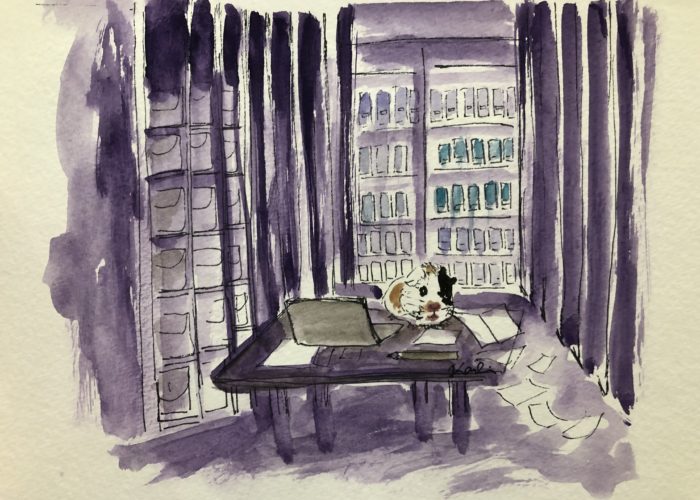
Water-color image of guinea pig conducting archival research.
0

Introduction: Issue Fourteen

From projects like the SNCC Digital Gateway to Colored Conventions, digital technologies are prompting renewed attention to archival research and teaching practices and creating new opportunities for engaging primary sources. At the same time, digital technologies are raising ethical questions about how archives are created, organized, shared, accessed, and preserved. Increased access has coincided with what Wendy Hayden calls “The Archival Turn’s Pedagogical Turn,” as instructors explore how archival encounters can catalyze student-centered, experiential, collaborative, and project-based learning experiences. With this issue, we sought to address several questions: How do scholars locate authoritative information and guarantee continued access in the current media landscape? How do we teach undergraduate students to perform archival research, evaluate digital sources, and even compose and curate their own archives?As a graduate student researching letter writing, special issue editor Jojo Karlin worked on a digital edition of her grandparents’ wartime overseas correspondence. From this experience, she saw the necessity for contemporary scholars to receive training in efficient and ethical digital asset management, including how to organize digital files and metadata. She realized that conversations about digital archives were occurring among librarians (who often see firsthand the transitions between technologies and the simultaneous organization of analog and digital materials) and among educators who teach with archives and want to leverage new technologies to help students create their own. She wondered how we could bring these conversations together.

As a newly-minted PhD, Danica Savonick recognized that her research on feminist literature and pedagogy was transformed by long hours spent in archives with the syllabi, lesson plans, and assignments of activist educators from previous generations. When performing research on pedagogical archives, what we often encounter is labor: the letters to administrators, budgets, and grant requests (interspersed with grocery lists) that remind us how much unseen work goes into producing the scene of teaching and learning. As she sought to develop similarly transformative archival assignments for her students, she realized how difficult it is to set the stage for a meaningful encounter with primary source documents. She wanted to work on this special issue to learn more about how other teacher-scholars are facilitating archival encounters in their classrooms.

As a former history student, Stephen Klein felt a guilty pleasure for archives even before he decided to become a librarian. Some of his most epiphanic moments of inquiry occurred when combing through archives and discovering a unique primary source that either supported his suspicions or fundamentally altered existing views. Despite maintaining some generalized best practices that he uses in his everyday work-life as a librarian, Stephen is interested in how archiving processes are often specific to the actual, unique objects being archived.

As co-editors we were delighted (and somewhat shocked) to receive an unprecedented number of submissions for this special issue, roughly 3 to 4 times more than an average JITP issue. Given the abundance of submissions, we added a section called “Views from the Field” to highlight short, praxis-based examples of archival research and teaching in action.

Several of the articles in this issue address how digital technologies are changing how we define, curate, and access archives. In “Crowdsourcing Traumatic History: Understanding the Historial Archive” Kirsti Girdharry analyzes Our Marathon: The Boston Bombing Digital Archive to consider what it means to collaborate with the public in crowdsourcing a digital archive. Girdharry analyzes how the digital impacts our understanding of archives, especially those that aim both to historicize and memorialize recent tragedies. In “Realizing the Past: Charting a Course for Sustainable Instruction and Engagement with Archival Materials Using Augmented and Virtual Reality Technologies” Amanda G. Pellerin, Ximin Mi, and Alison Valk describe the opportunities and limitations that augmented and virtual reality provide for accessing archival objects. While these technologies may help democratize access to archival materials, the authors also consider what might get lost in digitizing a rich three-dimensional object. (And for those interested in similar projects, keep an eye out for the CFP for an upcoming special themed issue of JITP on virtual reality edited by Amanda Licastro and Angel David Nieves.)

The majority of articles in this special issue focus on how “teaching and research with archives,” centers the work of collaboration. As scholars have noted, digital projects require many hands on deck—what Cathy N. Davidson calls “collaboration by difference”—prompting the creation of new academic procedures and protocols like “Guidelines for Evaluating Work in Digital Humanities and Digital Media.” Similarly, teaching with archives requires carefully scaffolded collaborations among faculty, staff, librarians, archivists, and instructional technologists that dispel the mythical notion of the genius scholar toiling away in isolation.

Several of the articles take up collaboration by demonstrating how work across institutions can be mutually beneficial. In “The Space Between Researcher, Object, Institution: Building Collaborative Knowledge with Primary Sources,” Mary Catherine Kinniburgh advocates for graduate-level archival training to support students using primary source research for their dissertations and theses. Kinniburgh discusses the Collaborative Seminar she organized in conjunction with the CUNY Graduate Center Library, the New York Public Library, and others, to generate a community of primary source researchers. While Kinniburgh focuses primarily on the humanities, authors Wendy Wasman, Thomas R. Beatman, Shanon Donnelly, Kathryn M. Flinn, Jeremy Spencer, and Ryan J. Trimbath show how institutional collaborations around archival projects can flourish in the natural sciences as well. In “Branching Out: Using Historical Records to Connect with the Environment,” Wasman et al. analyze the digitized archives of Cleveland naturalist A.B. Williams to show how inter-institutional collaboration can mobilize resources for educational use, from primary school exercises to graduate research.

Another cluster of articles describes collaboration in the context of joint efforts among faculty, students, and archivists to co-create digital archives. In “Digital Paxton: Collaborative Construction with Eighteenth-Century Manuscript Collections,” Will Fenton, Kate Johnson, and Kelly Schmidt describe a collaboration between faculty and students to produce a digital archive as a way of introducing students to concepts of knowledge production and archival construction. Drawing on the Collaborators’ Bill of Rights, they describe an assignment that involved students in knowledge production by contributing to the Digital Paxton project. In “Teaching Colonial Translations Through Archives: From Ink and Quill to XML (Or Not),” Allison Bigelow describes an assignment in which students helped to translate and edit colonial documents from the Early Americas Digital Archive. Through the assignment, “students learn about colonial archives by approaching them as public-facing, meaning-making sites of translation, interpretation, and textual editing, and by remediating print materials from the archives into annotated translations.”

Several articles consider these student-centered archival practices in the context of writing classrooms. In “From Page to Screen and Back Again: Archives-Centered Pedagogy for the 21st Century Writing Classroom,” Elizabeth Davis, Nancee Reeves, and Teresa Saxton analyze how archival research can help students better understand composition as a process of remixing, recontextualizing, collaborating, and curating. Through carefully scaffolded assignments, their students developed an “archives-based composition process” that improved their understanding of the social nature of writing and the material properties of texts, both of which are essential components of twenty-first-century literacies. In “‘Diving Into the Wreck’: (Re)Creating the Archive in the First-Year Writing Classroom” Maxine Krenzel and Daisy Atterbury describe a semester-long peer writing exchange across institutions based on poet Adrienne Rich’s archival teaching materials. With digital file sharing, they dislocate the classroom across campuses and ask, “How can the work that students leave behind inspire and enact its own unique pedagogy?”

Many of these articles consider how archival materials—zines, campus newsletters, correspondence—can help students address important questions about who gets to write history, whose stories are included, and whose are left out. In “Narrating Memory through Rhetorical Reflections: CUNY Students and Their Archives,” Wendy Hayden, María Hernández-Ojeda, and Iris Finkel describe a series of assignments in which undergraduates performed research in physical, institutional archives and shared their findings on digital platforms. In doing so, students became “active agents of generational transmission” who learned about history through the process of contributing to institutional memories. In “Collaboration Adventures with Primary Sources: Exploring Creative and Digital Outputs,” Jennifer Needham and Jeanann Croft Haas analyze the collaborative efforts among University of Pittsburgh librarians and faculty to incorporate the institution’s archival collections into the classroom. Through a series of case studies, Needham and Haas show how archival pedagogy can support an environment of student innovation through the production of what they call “creative outputs,” including websites, blog posts, zines, data sets, and visualizations.

Archives have long been central to feminist, antiracist, and justice-oriented research that recovers the historical contributions of women, people of color, and LGBTQ people. Several articles in this special issue extend this work to the undergraduate classroom. In “Engaging Women’s History through Collaborative Archival Wikipedia Projects,” Ariella Rotramel, Rebecca Parmer, and Rose Oliveira show how archivists, students, and faculty can facilitate knowledge production guided by feminist theory. Together they worked to leverage Wikipedia’s global reach “while struggling with editorial criteria that value objectivity and notoriety.” In “Possibly Impossible; Or, Teaching Undergraduates to Confront Digital and Archival Research Methodologies, Social Media Networking, and Potential Failure,” Rebekah Fitzsimmons and Suzan Alteri analyze an assignment that involved students in recovering the biographies of under-represented women science writers of the 19th century. The authors emphasize the potential and possible failure inherent in original research and found that “[s]tudents felt successful regardless of how much information they located; even [those] with no results reported feeling they had learned a significant amount from the project.” Recovery is also central to the feminist and antiracist projects described in a View by Ken Grossi, Alexia Hudson-Ward, Carol Lasser, Sarah Minion, and Natalia Shevin titled “How a Digital Collaboration at Oberlin College Between Archivists, Faculty, Students and Librarians Found its Muse in Mary Church Terrell, Nineteenth-Century Feminist and Civil Rights Icon.” In this View, the authors describe how faculty, students, and an archivist collaborated to help students co-author digital mini-editions for the Digitizing American Feminisms project.

Considered together, these articles demonstrate that historical inquiry is thriving. Students nationwide are learning how to access primary source documents and to consider the mechanisms of power that underscore how archives are constructed and accessed. We hope these articles will inspire researchers and educators to try something new or different, and share what they learn from the experience. And we hope you enjoy reading these articles as much as we enjoyed collaborating across time, space, and institutions to edit them.

About the Issue Editors

Danica Savonick is Assistant Professor of English at SUNY Cortland. She holds a PhD in English and a Certificate in American Studies from the CUNY Graduate Center. Danica blogs regularly about pedagogy and social justice and her work has appeared in American Literature, Digital Humanities Quarterly, Modern Fiction Studies, and Hybrid Pedagogy. Her current manuscript, Insurgent Knowledge, analyzes the activist pedagogies of Audre Lorde, June Jordan, Adrienne Rich, and Toni Cade Bambara. Danica serves on the Steering Committee for HASTAC.org and is lead author of “Gender Bias in Academe.”

Jojo Karlin, a PhD candidate in English at the Graduate Center, City University of New York, is dedicated to ideas about books, letters, and communication. As the Manifold Scholarship fellow, she is helping to develop Open Education Resources on the Mellon-funded, open source, hybrid publishing platform. As outreach coordinator for the NEH-funded DH Box, she co-led a course in Web APIs with Python at the Digital Humanities Summer Institute. An actress and an artist, she continually seeks creative ways of engaging the academy and the public, whether through drawing, performance, or posted letter.

Stephen I. Klein, the Digital Services Librarian at the Mina Rees CUNY Graduate School Library, spends much of his work-life behind the scenes insuring that the pulse of the GC’s library systems continue to work seamlessly for library users. He also spends time ‘freaking-out’ about the crisis of how our cultural heritage is quickly disappearing, because of the acceleration of modern ephemera with the advent of the web as one of the central forums for popular conversation and academic scholarship.

and of a student in Cleveland Museum of Natural History Archives
0

Branching Out: Using Historical Records to Connect with the Environment

Abstract

What started out as an effort to digitize a small collection (two and a half linear feet) of archival material mushroomed into several interconnected projects, described here, that demonstrate the value of accessibility of historical records in the natural sciences. Funding from the National Historical Publications and Records Commission enabled the Cleveland Museum of Natural History to collaborate with Baldwin Wallace University to create an accessible online repository of original material from Cleveland naturalist A.B. Williams, and to design a curriculum for teaching with those primary sources in middle and high school classrooms. Graduate students at the University of Akron were instrumental in developing lesson plans, field trip protocols, and even a unique game from the digitized resources to facilitate learning about the different types of trees in the A.B. Williams Memorial Woods. Further collaborations followed, creating opportunities for undergraduate students at two area universities (University of Akron and Baldwin Wallace) to use the digitized data within the historical records to create georeferenced maps and to conduct a re-survey of the forest. This paper highlights how the digitization of archival materials allows for the development of numerous types of educational and research resources, with three products as proofs of concept.

Introduction: Teaching with Historical Records in the Natural Sciences

In the sciences, primary sources can be defined as records of observations in the natural world. Teaching with primary sources is an integral part of inquiry-based learning, and both archivists and educators have embraced opportunities to use archival materials in the classroom. Allowing students to use the raw material of scholarship has the potential to reap benefits. Students learn to consider different perspectives and to think critically (Hendry 2007). Students might also feel more invested in their research when they get to see original sources (Tally and Goldenberg 2005). By working with primary sources in the sciences, students can develop their own skills of observation and analysis (Austin and Thompson 2015). The Discover – Explore – Connect project was developed to introduce middle and high school students to different types of historical records in the natural sciences, such as field notes, maps, and photographs. By engaging with these primary sources, the project aims to teach and enforce the skills of observation and analysis in both the classroom and outdoors. The project demonstrates how both educational and research tools can be developed and implemented when archival materials are made accessible through digitization.
In July 2016, the Archives of the Cleveland Museum of Natural History (CMNH) received a two-year grant from the National Historical Publications and Records Commission (NHPRC). The project, titled Discover – Explore – Connect: Engaging with the Environment through Historical Records in the Natural Sciences, was part of the NHPRC’s Literacy and Engagement with Historical Records program. The funding allowed the CMNH Archives to digitize 2.5 linear feet of records relating to Arthur B. Williams, a naturalist and educator who shaped outdoor education in the Cleveland area in the 1930’s – 1950’s. Digitization not only allows access to the irreplaceable primary sources, but does so in a way that allows preservation of the original documents and materials. The material was digitized by work-study students at Baldwin Wallace University, under the supervision of the University Archivist. The students who digitized the material learned how to handle fragile documents, use scanning equipment, and assign metadata to the finished electronic documents.

With the rich resources within the A.B. Williams archive digitized, teachers, students, researchers, and citizen scientists can access and use the material to glean valuable information about the natural world around them. Several interconnected projects have been developed that draw from the A.B. Williams Archive: a curriculum that contains both classroom and outdoor experiences, including a game; GIS applications; and a re-survey of the forest that allows for comparison with the historical data.

Results: Projects Derived from Digitized Materials

Lesson plans for ecological literacy

The goal of the Discover – Explore – Connect curriculum is to teach middle school and high school students the skills necessary to study the natural world around them. Through a series of lessons, students learn orienteering, species identification, mapping, taking field notes, and collecting data, with A.B. Williams as their guide. The curriculum is divided into three major sections: Skills Development and Game-Based Learning; Field Trip to A.B. Williams Memorial Woods; and the Land Ethic.

The lesson plans in the Skills Development section introduce students to primary sources and teach them how to identify and analyze different types of primary sources, such as maps, photographs, and written documents. Students also learn how to interpret and use different types of information that can be found in scientific documents, such as charts, data tables, maps, graphs, and diagrams. Additional lesson plans guide students in making observations, keeping field notes, finding their way around a map, and recording observations on a map. Subsequent lessons help students build skills in identifying different species of wildflowers, birds, and trees.

A unique addition to the curriculum is a game that was developed as an orientation for field trips to the A.B. Williams Memorial Woods in the North Chagrin Reservation of the Cleveland Metroparks. Well-designed games have been shown to facilitate engagement with learning (Dickey 2005; Abdul Jabbar and Felicia 2015) and improve meaning-making for the players (Ermi and Mayra 2005). The game was designed to deliver three main learning outcomes: familiarize students with the layout of the A.B. Williams Memorial Woods; provide a practical tutorial in using dichotomous keys to identify wildlife; and prepare students to survey plant and animals communities in the forest. By simulating the types of activities that will take place on their visit to the forest, students should be better prepared and focused during the field trip (Falk and Dierking 2000).

For the game’s design and construction, the A.B. Williams Memorial Woods was split into five regions based on different forest communities: Beech-Maple Association; Northwest Forest; Southeast Forest; Spurs and Ravines; and Swamp Forest (Figure 1).

A map of the A.B. Williams Memorial Woods. It is divided into five color-coded regions: Northwest Forest; Spurs and Ravines; Southeast Forest; Beech-Maple Association; Swamp Forest.

Figure 1. Game map showing the different regions of the A.B. Williams Memorial Woods in the North Chagrin Reservation of the Cleveland Metroparks

Using A.B. Williams’ historical survey data of tree distributions, decks of cards were constructed for each of these regions. Each deck contains between 17 and 39 cards. Individual tree species for each region are depicted on the cards using illustrations of leaves that were drawn by A.B. Williams and are part of the digitized collection; drawings of twigs and buds were created by the project’s graphic designer to provide additional information to aid species identification. Each card provides enough information for the tree species to be identified using the provided dichotomous key or a field guide, along with a symbol to allow for easy sorting of cards based on region, and a number value to indicate how many individual trees that card represents (Figure 2).

An example of card used in the tree identification game. It depicts the leaf and stem pattern, the forest community in which it is found, and the number of individual trees the card represents.

Figure 2. Example of card showing a single species of tree to be identified

For each deck, the number of cards depicting the same tree species is based upon the proportionate number of those trees surveyed in that region by Williams in the 1930’s (Williams 1936). To keep the decks at workable sizes while allowing for representation in the deck of all the tree species in each region, the ratio of number of cards to total count of corresponding tree species is arranged upon a log scale, which results in the number of cards per species corresponding roughly with order of magnitude rather than actual counts. Accompanying these decks are a specially constructed dichotomous key (Figure 3) and data collection sheets for student groups to record distribution data (multiple cards of the same species have different numbers to simulate the actual counting activity). Instructors also have an answer and scoring sheet that allows them to track student success rates and completion times, and to check on each group’s work.

A dichotomous key for the trees found in the A.B. Williams Memorial Woods. It features 17 questions about a tree’s characteristics, each with two answers. Each answer leads to another question, which then points to the tree’s identity by the end of the questions.

Figure 3. Dichotomous key to be used for identifying trees in the A.B. Williams Memorial Woods

Gameplay requires students to work together in teams to effectively and efficiently identify the trees in each region. The game can be played while sitting at a desk, but we encourage teachers to set up the classroom as the forest and have students move around from community to community. The instructor serves as a scorekeeper to track both accuracy and speed, and each student group competes to be best at identifying and surveying tree species. As players progress through surveying each region’s deck, they will grow more proficient in using the dichotomous key to identify trees, and they will acquire information on the distributions of individual tree species throughout the A.B. Williams Memorial Woods.

Future work can not only further develop this game, but also expand upon it to include modules that examine wildflowers and songbirds, using resources made available through the digitized A.B. Williams archival material. This game is designed in such a way that it can easily be adapted to any location that has robust biological survey data, with limited adjustment to its design. The game is currently being developed to work as a standalone boxed experience that can be played like a traditional board/card game as opposed to a classroom activity.

The Discover – Explore – Connect curriculum was introduced at a teacher workshop held at CMNH in February 2018. The 18 teachers who attended the workshop included classroom teachers, homeschool parents, university/college educators, and informal science educators (i.e., museum docents, library media specialists, park naturalists). Educators worked through several lessons and played a test version of the A.B. Williams Forest Community Challenge Game. We received valuable feedback on the game and the curriculum, and this input will help as we continue to develop both for future use.

Following the workshop, we tested the curriculum and field trip with five classes of 10th-grade biology students from a school within the Cleveland Metropolitan School District. The teacher had attended the workshop in February and, because her school has an extended academic year, she was able to work through some of the lesson plans and schedule a field trip. Project team members visited the school at the end of May and introduced the A.B. Williams Forest Community Challenge Game to each of the five biology classes during the school day. Fifty students learned how to use the dichotomous key to identify trees featured on the game cards. While challenging at first, by the end of each class we could see that the students had made a lot of progress. The game set the stage for the June 22nd field trip to the A.B. Williams Memorial Woods. Team members planned a full day of field experiences at four different stations in the woods. The 27 students in attendance, accompanied by their teacher and three chaperones, were broken up into four groups. Each group was led by a member of the project team as they cycled through all four stations and completed the activities, which included counting and measuring trees within a designated area, honing observation skills while focusing on sounds, and learning about the Civilian Conservation Corps’ efforts to build a shelter in the woods in 1933.

The field trip was a rewarding experience for everyone. While guiding a group into the forest, the leader held up a large leaf that had been found on the ground. One of the students immediately noticed its shape and started to identify it based on the dichotomous key used during the A.B. Williams Forest Community Challenge game in class. Following the field trip, the teacher solicited feedback from her students. One of the students said, “The field trip was very breathtaking…A.B. Williams – I feel like I was walking on his path [and] you saw his nature as it was…I feel like what he did was awesome.”

Our hope is that the Discover – Explore – Connect curriculum will be used in classrooms throughout the school year, so that by April or May teachers and students will be ready for at least one field trip to the A.B. Williams Memorial Woods. Lesson plans for the field trip include mapping and tallying trees and comparing those numbers with what Williams observed in those same woods 80 years ago. Once back in the classrooms, students turn to lesson plans that help them reflect on the changes that have occurred in the forest ecosystem and encourage them to examine their relationship with the natural world around them.

Where in the world…? Applying GIS technologies to historical records

The digitization of the Williams collection not only provides access to more easily view the materials, but an exciting further step is to integrate the historical maps using Geographic Information Systems (GIS). GIS is database software that allows disparate data sources to be integrated and assigned to specific coordinates on a map. This process requires that features in the maps be identified and related to a spatial reference system. The term ‘georeferencing’ is used to describe this process of adding a spatial reference system to the digital image of a historical map.

Along with visually comparing maps that have been georeferenced to the same spatial reference system, the features on the map can be depicted using points, lines, and areas. These point, line, and area features can then be graphically manipulated, incorporated with other spatial data sets, and quantitatively analyzed. For example, Williams made many maps of the trees in the North Chagrin Reservation of the Cleveland Metroparks; when georeferenced, the trees drawn on these maps can be converted to points, combined with trees from other maps, and drawn in any cartographic style.

Georeferencing the hand-drawn maps from Williams was both challenging and critical to the accuracy of any derived spatial data sets. Whatever spatial uncertainty is present in the georeferencing (there was considerable uncertainty) will be propagated through any future uses of the maps. The general strategy in georeferencing is to find features on the map that can either be located on other spatial data sets, such as aerial photography or topographic maps, or can be located in the current landscape. Whether on other imagery or in the current landscape, these identifiable locations used for georeferencing the historical maps are known as ground control points or GCPs.

Because Williams included different features on different maps but did not ever include all the features on a single map, the necessary strategy was to georeference his maps by using the best ground control points from each map. For instance, features on Williams’ maps that could not move over time, such as the foundation of the Trailside Museum in the North Chagrin Reservation, provided the best way to match features on the historical map to current features in the landscape whose coordinates we can measure with global positions systems (GPS). Because there were not enough of these more permanent features, other features such as bridges and trail intersections were also used. Since these features have a higher likelihood of having moved over the past eight decades, they introduce more uncertainty into the georeferencing process. Three authors of the paper went out into field in September of 2017 to obtain the GPS coordinates of locations/objects that were present on A.B. Williams’ various maps and could potentially be used as ground control points (Figure 4).

The image shows GIS software where a map drawn by A. B. Williams is being georeferenced using coordinates of features that are still currently visible in the landscape. These features include trails, bridges, buildings, and select trees.

Figure 4. A screenshot showing one of A.B. Williams’ hand-drawn maps matched to GPS coordinates of GCPs. The table on the top right of the image shows details on the GCPs such as latitude and longitude, as well as root mean square error (RMS).

In several GIS and Cartography courses, undergraduate and graduate students were provided with digital versions of some of Williams’ maps of trees by species and ground control points generated by the instructors. Since Williams produced no single map that contained all the features that could serve as GCPs, the students were instructed to utilize a series of exterior points on the species maps derived from the original georeferencing attempt (Figure 5).

The image shows two maps. The first map shows features, such as trails and bridges that were used as ground control points when visited by course instructors. The second map is an example of a map of individual species that students georeferenced. Coordinates for easily identifiable locations were extracted from the first map to allow students to more easily and accurately georeference the second map.

Figure 5. GPS coordinates were used by instructors to georeference an A.B. Williams map (left map above) and then four clearly identifiable locations were chosen for students to use to georeference maps of individual species such as the map of red maple.

The students then georeferenced their assigned species maps and created point representations of the individual trees. This assignment covered several core GIS methods, including georeferencing, feature creation, editing attribute tables, and spatial reference system concepts, while engaging students in the creation of new geospatial data that will be used in future coursework, research, and public displays. The use of historical data also allowed an important discussion of the value of archives in change analysis and the sources and implications of uncertainty in spatial data.

The spatial data sets of tree locations created by the students in the GIS and Cartography courses were then analyzed by students in a Spatial Analysis course. The students in this course were learning to use spatial statistical methods to identify and describe spatial patterns in large data sets. The data set of tree locations created in the earlier exercise included the species of the tree, so interspecific comparisons of clustering and dispersion were done by the students using common spatial statistics, such as average nearest neighbor, quadrat analysis, and Ripley’s K function. Several of the students in the Spatial Analysis course were also in the GIS or Cartography courses, and they were able to help explain the larger story of Williams’ work to the students who had not previously been exposed to the archive. Anecdotally, student reflections suggest that the use of historical hand-drawn maps makes the presence of spatial uncertainty more obvious than with modern digital data sources. Students were able to translate the uncertainty introduced from the data source into reasonable limitations in the interpretation of results.

While the maps that are part of the Williams archive have already proven to be pedagogically valuable, we expect to continue to develop these data sources in several ways. There are still numerous maps that need to be georeferenced and have their contents converted to spatial features. Our initial experiences in this process have been positive and instructive. As more of the maps are processed, the database available for spatial analysis will also grow. This database will be utilized by students in course assignments and individual projects. As more of the maps and spatial data are completed, students in the GIS Database Design course will be learning ways to make these databases publicly available through web mapping applications.

Once the maps have been processed and converted to features, they can be compared with the results of the re-survey efforts described in the next section of the paper. This increases the value of the data from analyzing the past to investigating how the present-day forests have changed. We expect that this highly detailed spatial database of plants and animal locations over an 80-year period in a highly urbanized and industrialized region will be valuable both for research and for communicating ecological change to the broader community.

Seeing the forest through the trees

Scientific researchers are also using the A.B. Williams archive to assess changes that have occurred over 86 years in the tree community diversity, composition, and structure of the old-growth A.B. Williams Memorial Woods. Undergraduate students, along with their professor, replicated Williams’ methods to resample trees in 58 of his plots. Such re-survey studies are valuable to the field of ecology because they provide the only direct evidence of changes over time in local species diversity and abundance (Sax and Gaines 2003; Kapfer et al. 2017). Other recent studies have used legacy data to gain insights into long-term ecological processes (Vellend et al. 2013; Perring et al. 2018), but few have been long enough to see changes in tree populations and forest communities (Müllerová et al. 2015; Šebesta et al. 2011). The Williams data provides a unique opportunity to observe changes over time in a protected old-growth forest.

In 1932, Williams (1932, 1936) counted, identified, and measured all trees ≥ 0.8-cm diameter in 44 8 × 10-m plots; counted and identified all trees at least knee high in 10 30 × 30-m plots; and counted, identified, and measured all trees at least 2 m tall in 4 15 × 15-m plots. In 2018, we relocated these plots based on the georeferencing described in the previous section and using Williams’s original tree maps, which enabled us to locate remaining individual trees. We counted, identified, and measured trees according to Williams’ methods. We plan to compare stand structure between 1932 and 2018, including stem density, basal area, and the proportions of stems in different size classes. We will compare species richness, diversity, and composition using techniques such as ordination and indicator species analysis. Finally, the observed changes will allow us to examine hypotheses about which factors, such as increased deer density or tree diseases, have driven the development of this forest. We can also assess whether tree species with certain traits have tended to increase in frequency. This study will provide rare insight into how and how much a protected old-growth forest changes over time in diversity, composition, and structure, and will suggest which ecological factors are responsible for the changes. The project provides information useful to basic ecological theory and to applied ecosystem management, including the managers of A.B. Williams Memorial Woods at Cleveland Metroparks, while providing opportunities to mentor undergraduate students in research.

Conclusion

Observations by local naturalists over a long period of time can shed light on seasonal changes. By comparing the data in these historical records with current observations and digitally captured data, scientists can investigate a number of phenomena including the impacts of climate change (Primack and Miller-Rushing 2012; Primack 2014; Ledneva et al 2004). Mining the data contained in historical scientific records has become easier than ever thanks to recent digitization efforts, such as the Smithsonian Field Book Project and Biodiversity Heritage Library, but many sources of historical observations remain hidden and unused in various repositories.

The Discover – Explore – Connect project had many moving parts with three main goals: digitize and make accessible this collection of archival material, create a curriculum for middle and high school teachers, and hold training for educators to learn how to teach using these primary sources in their classrooms and outdoors. From these goals, the project expanded its scope to include other uses for the valuable data contained within the digitized material, including a game, georeferenced maps, and a re-survey of a local forest. Two and a half linear feet of historical records can be developed and used in several different and exciting ways.

Bibliography

Abdul Jabbar, Azita Iliya, and Patrick Felicia. 2015. “Gameplay Engagement and Learning in Game-Based Learning: A Systematic Review.” Review of Educational Research 85(4): 740–779.

Austin, Hilary Mac, and Kathleen Thompson. 2015. Examining the Evidence: Seven Strategies for Teaching with Primary Source. Chicago: Maupin House Publishing.

Dickey Michele. 2005. “Engaging by Design: How Engagement Strategies in Popular Computer and Video Games Can Transform Instructional Design.” ETR&D 53(2): 67–83.

Ermi, Laura, and Frans Mäyrä. 2005. “Fundamental Components of the Gameplay Experience: Analysing Immersion.” In Proceedings of the 2005 DiGRA International Conference: Changing Views: Worlds in Play, 15–27. http://www.digra.org/wp-content/uploads/digital-library/06276.4156.pdf.

Falk, J. H., & Dierking, L. D. 2000. Learning from Museums: Visitor Experiences and the Making of Meaning. Lanham, MD: Rowman & Littlefield.

Hendry, Julia. 2007. “Primary Sources in K-12 Education: Opportunities for Archives.” American Archivist 70 (Spring/Summer): 114-29.

Kapfer, Jutta, Radim Hédl, Gerald Jurasinski, Martin Kopecky, Fride H. Schei, and John-Arvid Grytnes. 2017. “Resurveying Historical Vegetation Data—Opportunities and Challenges.” Applied Vegetation Science 20 (2): 164-171.

Ledneva, Anna, et al. 2004. “Climate Change as Reflected in a Naturalist’s Diary, Middleborough, Massachusetts.” Wilson Bulletin 116, no. 3: 224-231.

Müllerová, Jana, Radim Hédl, and Péter Szabó. 2015. “Coppice Abandonment and its Implications for Species Diversity in Forest Vegetation.”Forest Ecology and Management 343: 88-100.

Perring, Michael P., Markus Bernhardt-Römermann, Lander Baeten, Gabriele Midolo, Haben Blondeel, Leen Depauw, Dries Landuyt, et al. 2018. “Global Environmental Change Effects on Plant Community Composition Trajectories Depend upon Management Legacies.” Global Change Biology 24 (4): 1722-1740.

Primack, Richard B., and Abraham J. Miller-Rushing. 2012. “Uncovering, Collecting, and Analyzing Records to Investigate the Ecological Impacts of Climate Change: a Template from Thoreau’s Concord.” BioScience 62 (February): 170-81.

Primack, Richard B. 2014. Walden Warming: Climate Change Comes to Thoreau’s Woods. Chicago: University of Chicago Press.

Sax, Dov F. and Steven D. Gaines. 2003. “Species Diversity: From Global Decreases to Local Increases.” Trends in Ecology and Evolution 18 (11): 561-566.

Šebesta, Jan, Pavel Šamonil, Jan Lacina, Filip Oulehle, Jakub Houška, and Antonín Buček. 2011. “Acidification of Primeval Forests in the Ukraine Carpathians: Vegetation and Soil Changes over Six Decades.” Forest Ecology and Management 262 (7): 1265-1279.

Tally, Bill, and Lauren B. Goldenberg. 2005. “Fostering Historical Thinking with Digitized Primary Sources.” Journal of Research on Technology in Education 38 (1): 1-21.

Vellend, Mark, Lander Baeten, Isla H. Myers-Smith, Sarah C. Elmendorf, Robin Beauséjour, Carissa D. Brown, Pieter De Frenne, Kris Verheyen, and Sonja Wipf. 2013. “Global Meta-Analysis Reveals No Net Change in Local-Scale Plant Biodiversity over Time.” Proceedings of the National Academy of Sciences 110 (48): 19456-19459.

Williams, Arthur B. 1932. “A Preliminary Study of a Beech-Maple Climax Community.” PhD diss., Case Western Reserve University, Cleveland, Ohio.

Williams, Arthur B. 1936. “The Composition and Dynamics of a Beech-Maple Climax Community.” Ecological Monographs 6: 317-408.

Appendix: Methods

Future usability of the digitized material was maximized through the methods of processing.

  • All scans were saved as non-compressed, lossless TIFFs at 600 dpi and then stitched together to create multi-page PDFs, to allow both maximum resolution and perusal.
  • Digitizers at BW used an ATIZ BookDrive DIY cradling book scanner, complete with two mounted Canon Rebel T2i 18.0 MP digital cameras and proprietary software.
  • Individual documents were scanned on an Epson Perfection V33 flatbed scanner, and an ELMO TT-12i overhead document camera was used to digitize the most fragile documents, such as a scrapbook of cyanotype photograms from 1910-1915.
  • Once digitized and converted to PDFs, all applicable text was OCRed via Adobe Acrobat Pro DC and then uploaded to an online collection hosted by BW using OCLC CONTENTdm. Metadata was assigned using Library of Congress Authorities.
About the Authors

Thomas R. Beatman is an Integrated Biosciences Ph.D. candidate in the Biology Department at the University of Akron. His dissertation is on the theory and application of using games and gameful experiences. He uses his background in biology in the design and development of science communication toolkits to translate complex biological problems to be more understandable to the public. His primary interest is in communicating biodiversity and evolution in informal science education environments.
Shanon Donnelly is an Assistant Professor in the Department of Geosciences at the University of Akron, where he uses geospatial technologies in teaching and research. He employs tools such as geographic information systems and remote sensing in the pursuit of connecting people’s lived experiences with emergent patterns of impact and opportunity across spatial and temporal scales.
Kathryn M. Flinn is an ecologist and Associate Professor of Biology at Baldwin Wallace University in Berea, Ohio. She earned a Ph.D. in Ecology and Evolutionary Biology from Cornell University. Her recent research examines plant community change through time in northeast Ohio. With two undergraduate collaborators, she assessed changes in an old-growth forest over 86 years by resurveying A.B. Williams’s plots. The results are forthcoming in Journal of the Torrey Botanical Society.
Jeremy M. Spencer is an Assistant Professor of Instruction in the Department of Geosciences at the University of Akron. He received his Ph.D. in climatology from Kent State University, where he focused on the impact of cold weather on human mortality. Currently, his academic interests involve the communication of climatology and geography. This includes outreach to local elementary and middle schools, as well as developing course materials that promote inquiry and critical thinking in college geography and atmospheric science courses.
Ryan J. Trimbath is an Ecologist and Natural Resource Manager with broad interest in understanding and protecting nature. He received a B.S. in Wildlife and Conservation Biology from Ohio University and is a Ph.D. candidate in Biology at the University of Akron. Ryan feels lucky to have opportunities to study forests across the country from Hawaii to New Hampshire.
Wendy Wasman is the Librarian & Archivist at the Cleveland Museum of Natural History in Cleveland, Ohio, where she oversees the 50,000-volume research library, curates the rare book collection, and manages the archives and special collections. She earned a B.A. from Oberlin College and an M.L.S. from Kent State University.


""
0

“Diving Into the Wreck”: (Re)Creating the Archive in the First Year Writing Classroom

Abstract

“I came to explore the wreck,” Adrienne Rich begins in her poem “Diving into the Wreck,” and tumbles to the depths of her questions about efficacy—of speaking, of writing, and of teaching—during a time when students activists shut down campuses across the country, striking for anti-racist education policies from curriculum design to admissions. With a desire to connect our students at Brooklyn and Queens College with the history of student activism at CUNY, we developed a semester long peer-peer writing exchange to take place between our composition classes where our students developed and exchanged writing prompts inspired by Rich’s archival teaching material. By having our students document and record the unfolding of their written exchange, we argue that this type of collaborative project offers a new way of conceiving how participants in a classroom can build, envision, and record new ways of learning. As every classroom leaves behind an archive of writing, notes, and lesson plans, we ask, what do we do with the written materials we and our students leave behind, the materials that signal the embodied work of building a space of learning? How can the work that students leave behind inspire and enact its own unique pedagogy? This paper will present the unfolding of our students’ writing exchange, ultimately demonstrating that the archive of materials left behind by Rich and our own project can further inspire students and instructors to question what is possible while living and working in the ever-shifting space of the writing classroom.

I came to explore the wreck.

The words are purposes.

The words are maps.

I came to see the damage that was done

and the treasures that prevail.

-Adrienne Rich, “Diving Into the Wreck”(2013, 22)

""

Figure 1. The image above shows a writing prompt created by a first year writing student at CUNY for the intra-classroom writing exchange between Brooklyn and Queens College.

“I came to explore the wreck,” Adrienne Rich begins her poem, and tumbles to the depths of her questions about efficacy—of speaking, writing, and teaching—during a time when student activists shut down campuses across the country, striking for antiracist education policies from curriculum design to admissions. When, as instructors of writing at Queens College and Brooklyn College, CUNY, we realized that we’d independently assigned our first-year writing classrooms selections from Rich’s recently published archive of teaching materials, we knew that beyond reading and analyzing her writing exercises, syllabi, or notes, our students would need to produce an archive of teaching materials of their own. We wondered, what could the process of recording and collecting their own work teach our students about the archive itself?

Designed as a collaboration between our students, ourselves, and Adrienne Rich’s teaching materials from Basic Writing at City College, we created an intra-classroom writing exchange in Spring 2018 which drew on the recent publication, ‘What We Are Part Of’: Teaching at CUNY: 1968-1974, (Parts I & II), published by Lost & Found: the CUNY Poetics Document Initiative in 2013. The project involved a total of forty-nine students, twenty-five at Queens and twenty-four at Brooklyn; half of the twenty-four Brooklyn College students were in CUNY’s SEEK (Search For Education, Elevation, and Knowledge) Program. Working simultaneously with other primary documents circulating during Adrienne Rich’s time at CUNY, our classes used digital file-sharing technology to eventually create an archive of their own writings. While discussing that no archive is ever complete–that any written record is a reconstruction of a lived context–we approached the archive as an evolving and contingent pedagogical map. Adrienne Rich’s poem “Diving Into the Wreck” was an important locus for this conversation because of the ways we were able to evoke the poem in the classroom as a living archive in a critically contingent digital space such as PennSound. Both classes listened to audio recordings hosted on UPenn’s poetry archive, giving students the chance to hear a recording of Adrienne Rich reading “Diving into the Wreck” at Stanford in the 1970s. The resonance of the poem’s themes in our own classrooms emphasized how the archive is kept alive and determined by the spaces in which it is contained. Ultimately, this allowed students to envision themselves as doing the work of both institutional critique and self archiving.

Tracing the Archive through CUNY’s History of Teacher & Student Activism

Lost & Found: the CUNY Poetics Document Initiative, published by the Center for the Humanities at The Graduate Center, CUNY, publishes “extra-poetic” material such as correspondence, journals, notes, transcriptions of letters and syllabi and pedagogical residue related to New American Poetry. Lost & Found “finds” the archive in sites which concretely include personal and institutional collections, raw materials gathered by editors, in interviews with living writers and selections from their material records, documents which circulate among poets, scholars, educators and fans, and in recirculated volumes which find their homes in collections, in libraries and in the classroom. More abstractly, the project locates the archive in person-to-person contact, verbal and non-quantifiable exchange, affective registers and especially in friendship.

The extent to which the classroom and the archive are considered together in the Lost & Found project cannot be understated. The publication collects pedagogical materials from a generation of poet educators teaching at CUNY in the 1960s and ‘70s. The Center for Humanities curates suggested groupings on their website for contemporary educators engaged in the building of syllabi for courses across CUNY and beyond with themed collections such as “Feminist Practice and Writing”; “Teaching Pedagogies/Methodologies”; “Resistance”; “Friendship and Politics”; “Radical Poetics”; “Queer Poetics,” and more.

Series IV’s “What We Are Part Of”: Teaching at CUNY: 1968-1974, Adrienne Rich (Parts I & II), collects the material traces of poet Adrienne Rich’s teachings at City College, and the series’ pedagogical focus continues with Series VII’s publication of investigations into other CUNY poets and educators: June Jordan: ‘Life Studies,’ 1966-1976, Audre Lorde: I teach myself in outline, Notes, Journals, Syllabi, & an Excerpt from Deotha, and Toni Cade Bambara: “Realizing the Dream of a Black University” & Other Writings (Parts I & II).

In the volume we introduced to our CUNY classrooms, we discussed how the notes, syllabi, and writing assignments created by Adrienne Rich exist not only as a record of poetic inquiry and pedagogical theory that Rich engaged with while teaching at City College, but also as a testament to the relationships formed through Rich’s commitment to deploying the “classroom” as a performative space in which writing, protest, and embodied action intersected. In designing an assignment sequence of our own, we noted the contingency inherent to the notion of the “classroom” for Rich: with classes closed frequently during the period due to student strikes and institutional flux, letters exchanged in the mail and individual meetings off-campus became the learning environments for Rich’s composition students.

(Dis)Locating the Classroom

The ontological designation that comes with naming helps us understand that Rich often called the classroom into being through an act of naming alone: to declare an exchange a “classroom” makes it so, whether in a basement cafeteria or by way of the U.S. Postal Service. In fact, where Rich locates the classroom is as important as how and where she dislocates it, for to her the classroom is also “cell–unit–enclosed & enclosing space in which teacher & students are alone together / Can be a prison cell / commune / trap / junction–place of coming-together / torture chamber”(Rich 2013, vol. 1, 15). In our own writing exchange, the use of file-sharing technology facilitated the exchange of student writing outside and between our two classrooms. Each classroom was able to create a folder of student work in Dropbox that functioned as an online dossier. So while our classrooms were separated across two different physical campuses, our students’ works were collected in this temporary digital classroom.

Printout: Notes, Statements, & Memos on SEEK 1969–1972. Introductory: What we are a part of. Classroom as cell—unit—enclosed & enclosing space in which teacher & students are alone together. Can be prison cell, commune, trap, junction—place of coming-together, torture chamber. But also part of much bigger nationwide cultural revolution: "Compensatory" education increasingly important aspect of "higher" education. a) movement for social change—break down false barriers of class & color to make all education truly open to all people who want it. b) movement for educational reform—such programs are surely going to effect changes in nature of teaching at all levels. c) At present, we are involved in THE key area of university teaching new territory—few if any proven "methods". Many inherited prejudices & rigidities stand in our way. a) in the educational hierarchy which has a vested interest in old methods. b) in students who have been taught that the classroom is something apart from "life" except that it will eventually either help you or prevent you from getting paycheck—are unaccustomed to relating classroom experience to larger whole.

Figure 2. Image from Adrienne Rich, “What We are Part Of”: Teaching at CUNY: 1968-1974 ed. Iemanjá Brown, Stefania Heim, erica kaufman, Kristin Moriah, Conor Tomás Reed, Talia Shalev and Wendy Tronrud, (Lost & Found: The CUNY Poetics Document Initiative Series IV, 2013), 15.

In a memo on SEEK from 1969 or 1970 (exact date unknown), Rich goes on to suggest that the classroom is “also part of much bigger nationwide cultural revolution,” elaborated as such

a. movement for social change–break down false barriers of class & color to
make all education truly open to all people who want it b. movement for educational reform–such programs are surely going to effect changes in nature of teaching at all levels […]. (Rich 2013, vol. 1, 15).

To locate the classroom in the exchange between teacher and student and simultaneously in the nationwide cultural revolution is to bring politics to the classroom and the classroom to the world. Rich knew that to teach in the classroom was to engage the world from close proximity, a paradox because such engagement allowed her to tap into much more far-reaching social and political engagements than she’d found through poetry alone.

CUNY Students and the Archive

Focusing on Rich’s Writing Exercises, the first written component of the assignment sequence asked students to respond to a “Dream Course” exercise in which Rich prompted her students with the following:

Writing exercises drawn from various classes 1969–1974: "Write a description of a course you would like to take some day—on any subject, or covering any kind of material. Talk about how you feel this material could best be taught, and what you would hope to be doing in the course. (It might be film-making, writing, history, some technical skill, contemporary issues, art, etc.) Talk about how you'd like this course to be run, under what conditions you would most enjoy and profit from it—how much classroom time how much reading and writing, how much individual work with a teacher, field trips, etc. If you know books you would like to be reading in such a course, name them, telling why you chose them. Also tell why this particular course would seem valuable to you, what you hope to gain from it for your life."

Figure 3. Image from Adrienne Rich, “What We are Part Of”: Teaching at CUNY: 1968-1974 ed. Iemanjá Brown, Stefania Heim, erica kaufman, Kristin Moriah, Conor Tomás Reed, Talia Shalev, and Wendy Tronrud, (Lost & Found: The CUNY Poetics Document Initiative Series IV, 2013), 7–8.

This first part of the assignment sequence asks students to put themselves in Rich’s classroom and imagine how the stakes of writing changed when the campus was transformed by protests. Our students were asked to read the “5 Demands” distributed in 1969 by a group of Black and Puerto Rican students at City College asking for equal representation and anti-racist admissions processes, as well as flyers, pamphlets, and notes that circulated across CUNY. Some of these materials can be found in the CUNY Digital History Archive, an online archive that collects digitized materials from CUNY’s history beginning in 1847 with the creation of the Free Academy in New York City and continuing to the present moment. To help students conceptualize their relationship to wider CUNY history, the CDHA offers a rich entry into the history of CUNY’s infrastructure, policies, and impact as a public institution, a history that implicates each student and determines their experience of education in the present. For instance, in order to access the “5 Demands,” students had to locate a link titled the “Creation of CUNY–Open Admissions Struggle” from a longer timeline, which ushered them to a page presenting wider archival materials from the late 1960s (oral histories, articles from student newspapers, and faculty memos). The CDHA’s Project History, which we also explored in the classroom setting, emphasizes that the CHDA emerged out of “gaps in the knowledge of CUNY faculty, students, staff, and alumni about that history,” a mission that resonated with our class’ focus on the archive as a means of generating engagement in the present with activism in the past.

Typewritten list of demands and justifications. Demand 1: A School of Black and Puerto Rican Studies. Demand 2: A Freshman Orientation for Black and Puerto Rican Students. Demand 3: That the SEEK Students have a Determining Voice in the Setting of Guidelines for the SEEK Program, Including the Hiring and Firing of SEEK Personnel. Demand 4: That the Racial Composition of the Entering Freshman Class be Racially Reflective of the High School Population.


Typewritten list of demands and justifications, continued. Demand 5: That All Education Majors be Required to take Black and Puerto Rican History and the Spanish Language. Followed by a summary of the events of the April 1969 City College occupation.

Figure 4. Unknown, “Five Demands,” CUNY Digital History Archive, accessed September 26, 2018, http://cdha.cuny.edu/items/show/6952.

The next component of the assignment sequence had students compose their own writing prompts to be exchanged through the same Dropbox folder with a student at a different campus. Giving students the option to use the Dream Course they designed as inspiration for their exercise, we randomly assigned partners to students at Queens and Brooklyn Colleges. Two weeks later, after our students received their completed assignments, each class discussed their initial reactions to their partners’ responses and to the assignment sequence more broadly. Finally, our students reflected on their experience on their own and turned in a portfolio of the whole exchange, including a final reflection essay.

Documenting the Present

The exchange took place in a dialogic space in which students used their own assignment to deepen their understanding of Adrienne Rich’s pedagogy as emerging out of a moment when students were calling their education into question. After discussing the “5 Demands,” current Brooklyn and Queens students prompted their partners to speak about contemporary debates including discussions around tuition-free higher education. One student wrote to his partner:

Writing Prompt: "The topic of tuition, free tuition, how high or low tuition should be, is constantly being discussed by students, professors, institutions, as well as law makers, and politicians. For this assignment you are asked to give your take on this debate. What do you believe you should be paying for a degree? Should students who cannot afford College be forced into taking out loans that will take them years to pay off? Be sure to not only discuss your opinion but why this will be most beneficial for everyone."

Figure 5. The above image shows a student prompt created for the writing exchange.

In asking each other to use writing as means of interrogating the wider education system in their current moment, these students performed—and, in turn, affirmed—continuities between the historical conditions of Rich’s archive and the present moment. Linking student activism in the late 1960s to debates around Free Tuition at CUNY in early 2018, another student used the assignment to prompt questions about education and access:

Writing Prompt: "Write a 1-2 page response, size 12 Times New Roman, double spaced. Describe what would your life be like if you did not have a college education and in what ways would it affect your life as it is now. Explain and give examples on how your attitude towards education would be and how would you view people who do not have the privilege to have an education."

Figure 6. The above image shows a student prompt created for the writing exchange.

Adrienne Rich’s Writing Exercises are opportunities for “reflection and action,” each assignment prompting students to tease out a “relationship to his [her/their] world, to his identity, to his sense of time and space, his trust in and suspicion of others, his ways of identifying others” (Rich 2013, vol. 1, 30) By  designing their own writing prompts and then documenting the unfolding of an epistolary exchange, students came to a new way of conceiving of how participants in a classroom can build, envision, and also leave a record of the work that can move beyond the space and time of a single classroom.

Remarking on the experience of working with partners they have never met in person, a student at Brooklyn College observed that the structure of the assignment performs the process of community building and activism: “[The exchange] could be seen as a performance from Adrienne Rich’s notes on teaching…it could resemble the strike from the 70s and us having to always engage even with students we have not interacted with.” During the university-wide strike, solidarity meant connecting students from different CUNY institutions through a circulation of flyers, memos, and other written material; community was created through shared embodied demonstrations and exchanges across CUNY’s disparate campuses. As this student points out, this project forged connections between students from Queens and Brooklyn, which helped students feel embedded in CUNY, a public university comprised of twenty-five campuses across New York City’s five boroughs. Now as the complexity of our students’ exchange is embodied in—and reduced to—a folder of written documents, our students experienced how the archive is always incomplete in so far as it is only a fragment of a dynamic and living context; furthermore, the archive is always changing as it is part of an ongoing dialogue between the moment of its creation and the work it inspires today.

Next Steps

When we envision future iterations of this assignment, we realize we as instructors need to account for how the habits and codes we used to relate to students influenced the structure of the exchange. As one student suggests, allowing students to contact each other on their own terms—rather than through the instructors—would emphasize the importance of writing for one another rather than depending on the instructors’ authority. Beyond putting students in direct contact with one another in both public and private platforms for exchange, we conceptualize a means of engaging a wider public by collaborating more directly with existing digital platforms such as Lost & Found, CDHA, and PennSound. Since these public archives served as key pedagogical material and framing devices for students, we envision the next steps of this project as not just engaging with but contributing to their form and content. Projects that allow students to engage with the historical record through a practice of self-archiving challenge us to restructure existing hierarchies and rethink where and how learning takes place. By envisioning a type of study rooted in investigating and enacting the process of building an archive, this project produces an immaterial space within the university where students shift the power and become the interlocutors for each other.

It is in this not-yet-mediated space of connectivity and exchange that we were able to honor and continue the work of CUNY’s student-activists; it is here that we can build new archives of learning in and beyond the classroom, to “reexamine all that we’ve been doing, try untested things, put ourselves on the line, be willing to take risks” (Rich 2013, vol. 1, 16).

Bibliography

Rich, Adrienne. 1973. Diving into the Wreck: Poems, 1971–1972. 1st ed. New York: Norton.

Rich, Adrienne. 2013. “What We Are Part Of.” In Teaching at CUNY: 1968-1974, vol. 1–2, ed. Iemanja Brown et al. New York: Lost and Found.

Lost & Found. n.d. “About Lost & Found.” Accessed June 15, 2018. https://www.centerforthehumanities.org/lost-and-found/about-lost-and-found.

About the Authors

Marguerite Daisy Atterbury is a writer and doctoral student at The Graduate Center, CUNY. Her research centers on 20/21st C. poetry with an interest in gender, race and coloniality. She is the co-director of NM Poetics, an annual summer program founded in 2010 to support conversation around aesthetics and politics in northern New Mexico. Her work engages audiences through various media including film, installation and performance as well as more traditional outlets of production and publication. She received her MFA from the Milton Avery School of the Arts at Bard College.

Maxine Krenzel is a doctoral student in English at CUNY’s Graduate Center. Her research interests are in composition-rhetoric theory, focusing on the history and pedagogy of first year writing programs, as well as feminist theory and autobiography. She teaches writing, literature, and ESL courses at Brooklyn College.

""
0

How a Digital Collaboration at Oberlin College Between Archivists, Faculty, Students, and Librarians Found Its Muse in Mary Church Terrell, Nineteenth-Century Feminist and Civil Rights Icon

Abstract

This collaboratively authored article explains how a pedagogical partnership at Oberlin College between archivists, faculty, librarians, and students led to Digitizing American Feminisms (americanfeminisms.org), a project begun with pedagogically designed class assignments. The cooperative work between archivists, faculty and students models the synergy that can be developed in thoughtfully developed projects. The resulting website includes over thirty documentary student-created projects featuring introductory essays with transcriptions and annotations of primary materials highlighting feminist histories from the Oberlin College Archives. Demonstrations of student learning, these documentary editions also democratize access to previously unpublished and obscure materials that enhance knowledge of the diverse dimensions of First and Second Wave American feminisms. Key in this multi-year project was the rediscovery of 1884 College graduate, feminist and civil rights advocate Mary Church Terrell, whose reclamation coincided with a major gift of papers by her heirs to the Oberlin College Archives. Recovering the history of Terrell inspired students to connect past and present, stimulated a conference on activism for alums and students, and helped move the College to rename its main library in her honor as it looks ahead to a digital future that will connect and empower diverse learners, faculty, archivists, librarians, and all those interested in social change.

Sixty years after her death, social justice activist and 1884 Oberlin College graduate Mary Church Terrell (1863–1954) stood at the center of a team of archivists, faculty, librarians, and students at her alma mater. Inspired by Terrell, we engaged in a series of collaborative projects that demonstrated the potential of digital history to rewrite dominant narratives and inspire activist interventions on our campus and beyond. Born to freed slaves in Memphis, Tennessee, Terrell fashioned an illustrious career as founding president of the National Association of Colored Women, charter member of the National Association for the Advancement of Colored People, and relentless leader in campaigns for women’s suffrage and racial equality. Although Terrell herself never encountered “digital humanities,” she became central to our cooperative work on the student-created web-published document projects that comprise Digitizing American Feminisms: Projects from Oberlin College, and she inspired further interventions for social justice on our campus and beyond. This “View from the Field” describes the collaborative digital archival assignment crafted for an Oberlin College history class and its afterlife, including the naming of Oberlin’s Main Library for Mary Church Terrell.

Our project originated in Fall 2012, when archivist Ken Grossi and Professor Carol Lasser attended a workshop on “Teaching the Archives,” sponsored by the Alliance to Advance Liberal Arts Colleges. Together, Ken and Carol designed an assignment for Carol’s history course on American feminisms in which students would transcribe items in the Oberlin College Archives and create “mini-editions”—small documentary projects presenting both digitized images and their transcriptions to make these materials widely available in digital form to public audiences. This assignment built on Carol’s earlier experiences helping students understand the relationship of past and present by creating “How Did Oberlin Women Students Draw on Their College Experience to Participate in Antebellum Social Movements, 1831-1861?” for the website Women and Social Movements in the United States, 1600-2000. In this assignment, Ken saw the opportunity to publicize and make widely available materials from lesser-known and underutilized but significant collections.

Archival research is the heart of Carol’s history pedagogy. She places the exploration of primary materials at the center of a “history compass,” which she asks students to use to develop their historical thinking. Specifically, the compass has three intersecting axes:

Axis “A” runs between seeming opposite reasons for why we study history: to recover the pastness of the past and to recognize the presentness of the past. Axis “B” connects the contrasting poles of historical causation: contingency, with its emphasis on free will and individual agency, and determinism, with its emphasis on the role played by forces beyond individuals’ control. Finally, axis “C” stretches between divergent methodological positions: the need for research in primary sources to locate evidence and establish historical facts and the need to construct historical interpretations in dialogue with other scholars. (Kornblith and Lasser 2009, 2–3).

Figure 1. Image of a “History Compass” with “Axes of Historical Analysis” at center and six spokes with arrows extending outward: “Contingency,” “Constructed Interpretations,” “Presentness of Past,” “Determinism,” “Factual Evidence,” and “Pastness of Past.”

As an archivist, Ken carefully preselected collections with diverse, accessible, and engaging materials, and flagged points of interest. For example, in the Frances Walker-Slocum Papers, he showed students the program for her pathbreaking 1976 piano recital of African American music at Oberlin. Ken also shared the courtship letter Ruth Alexander wrote to her future first husband describing her efforts to capture a porcupine on film, which enticed students to pursue a project on this multi-dimensional woman of extraordinary drive. Another team took great interest in an 1860 letter from Jamaica written by single missionary Lucy Woodcock to her brother. This focused engagement with specific documents was crucial given the time limits of the busy semester, during which students were also exploring the many interwoven narratives of American feminisms.

The archival assignment was broken into several parts to scaffold the learning goals that develop students’ historical thinking. Each student was assigned to a research team to produce their “mini-edition” based on a particular collection in the Oberlin College Archives. Composed of three students, each team skimmed collections in a special archival session at the beginning of the term and identified their preferred collection. Each individual was responsible for transcribing 500–2,000 words from a particular document or series of documents, which entailed slow, careful reading. In addition, each student produced a heading for their document(s) with identifying information (creator, date, place, type of document), and a 150–300 word introductory note underscoring the importance of context. Every document required appropriate annotations to identify elements that might be new to readers. Each team also cooperatively produced an introduction to their mini-edition, about 500–1,500 words in length, explaining the project’s overall significance and demonstrating their ability to interpret the past. Finally, each group had to produce a bibliography, which highlighted how present interpretations are built on past constructions. Grappling with unfamiliar people, phrases, and ideas, students learned to analyze the distance between past and present.

After Ken conducted an introductory session on archival research methods, students returned regularly to the archives to receive further one-on-one assistance in navigating their collection and related resources. They learned to use finding guides, identify sources and citations for footnotes, and manage digital versions of scanned archival documents. Many students made particular use of the special Monday evening hours at the archives, scheduled to accommodate their hectic days.

Ken and Carol noted appreciatively that students improved their efforts when their assignments could be read by a general audience far beyond their classroom. Yet, while excellent, the completed student projects did not always meet the standards for digital publications on a scholarly website. To improve the quality of these mini-editions, Ken and Carol used local Mellon grants targeted at digital projects plus important supplements from Oberlin College to hire trios of student assistants, primarily recruited from the class, in the summers of 2015 and 2016. As the student assistants improved the quality of these digital mini-editions by incorporating new documents, additional visuals, and even sound recordings, they refined their historical thinking skills and developed editorial expertise. One student focused on the digital layout of our project, eventually guiding us toward the use of WordPress, preferred for its appearance and functionality, especially the ease with which Word documents could be migrated to its platform.

Figure 2. Homepage for Digitizing American Feminisms.

Through their work on Digitizing American Feminisms, the student assistants refined their historical analysis skills. For example, one team of student assistants curated and analyzed the correspondence between antebellum Oberlin African American alumna Lucy Stanton Day and the American Missionary Association. In the correspondence, Day and the association members debated her suitability to serve them at the end of the Civil War. The team of students teased meaning out of cryptic exchanges and came to appreciate the vocabulary of the past on its own terms (Hoak et al. 2015). Another group of students analyzed the courtship letters between early Oberlin students James H Fairchild and Mary Kellogg. The students were horrified by sentences revealing abolitionists’ unreflective participation in racialized culture. Through their analysis of these letters, the students grappled with language and context, eventually coming to terms with the distance between—and proximity of— past and present (Kummer-Landau et al. 2015). The students focusing on Frances Walker Slocum, Oberlin’s first tenured female faculty member of color, pointed out the heartbreaking contradiction that she was shunned by other women teaching in the conservatory, even as the Women’s Movement came into its own (Kummer-Landau et al. 2016).

In February 2015, Oberlin students Sarah Minion, Natalia Shevin, and Michaela Fouad connected past and present through their work on Mary Church Terrell, applying her quest for social justice to current struggles. As Natalia and Sarah later reflected,

Four months before we began our research, in November 2014, prosecutors in Ferguson, Missouri, had chosen not to indict Officer Darren Wilson for the murder of Mike Brown, which reignited national Black Lives Matter protests. On our campus, Black students made myriad demands on the College (Stocker 2014). As we joined protests in Oberlin and Cleveland, we were also making our way through Terrell’s then-modest materials in the Oberlin College Archives. Almost immediately, we saw how experiences of racism like those we now witnessed at school and in national headlines had, in earlier times, motivated Terrell’s life-long pursuit of a more just world, especially for African American women. Discovering, selecting, transcribing, and digitizing Terrell’s papers at the Oberlin College Archives brought her with us into the present at a critical moment. Terrell became for us at once a testament to the ambitious spirit of Oberlin and a guide for who we must strive to be as students, administrators, faculty, staff, and alumni.

When we pored over Terrell’s files, we noticed, stuck between her letters and manuscripts, the business card of Russell Thomas Edwards, a lobbyist in Washington D. C. While Edwards and his relationship to Terrell remain unclear, the phrase he composed in jaunty, deliberate script across the front of his card became our inspiration for understanding Terrell’s tenacity: “You can’t keep her out.” It served both as a warning to all who attempted to silence Terrell in her relentless challenges to institutional barriers that obstructed the advancement of African Americans and women, and as an acknowledgement of her accomplishments in doing exactly that. It spoke to the many ways in which Terrell seized access to the very institutions that tried to keep her—and her commitment to racial and gender justice—out.


Figure 3. Introduction to March Church Terrell project on Digitizing American Feminisms website.

In an effort to replicate for our readers our own experiences in the physical archive we used Edwards’ words to title our mini-edition (Fouad et al. 2015). We drew documents from different boxes and different collections to tell our story of Terrell’s confrontation with Oberlin College administrations, as well as with local and federal policy-making agencies. We explored the flexibility of the digital space to construct a coherent narrative from disparate documents, allowing us to highlight Terrell’s simultaneously compassionate and critical relationship to her alma mater. Terrell honored the place that Oberlin College occupied in her own life story and in abolitionist history, but, at the same time, held administrators accountable for its subsequent “back-sliding” on racial justice (Terrell 1914). To allow readers to see this for themselves, we transcribed each document in our project in full. Yet we acknowledge our influence on the narrative through our selection, interpretation, and authoring of introductions to the documents.

We hope her life and words, presented in our digital exhibit, will continue to inform bold progress at Oberlin College and to inspire us as we strive to be active alumni and citizens.

Sarah and Natalia continue to honor Terrell’s legacy—to be unyielding and courageous in the necessary work for social justice.

Their digital work had yet further repercussions on our campus. In a remarkable twist of fate, just after the completion of this class project, Alison Parker, professor of history at the College at Brockport, SUNY, at work on her scholarly biography of Mary Church Terrell, reached out to connect Oberlin students and faculty with Terrell’s heirs Raymond and Jean Langston. In her conversations with the Langstons, Parker emphasized the importance of Terrell’s archives to students, faculty, and staff at Oberlin, and the Langstons chose to donate a number of Terrell’s papers, which remained in their possession. This gift then inspired collaboration between Oberlin’s Africana Studies Program, chaired by Professor Pam Brooks, and the Gender, Sexuality and Feminist Studies Program, which Carol then chaired, resulting in a Spring 2016 conference entitled “Complicated Relationships: Mary Church Terrell’s Legacy for 21st Century Activists.”[1] Joined by the Departments of History and Comparative American Studies, the Library, the Alumni Association, the Oberlin Alumni Association Of African Ancestry, and others, this celebration of the “homecoming” of Terrell’s papers brought together scholars, students, and alumni to explore our histories and our futures. Thinking with Mary Church Terrell, the conference pondered how she could help us understand engagement, respectability, and activism in the digital age. We asked what Terrell’s synthesis of pragmatic and strategic approaches to advancing civil rights and suffrage could teach us about approaching social justice work today.

Mary Church Terrell lingers on the Oberlin campus. In July 2016, newly appointed Director of Libraries Alexia Hudson-Ward could not understand why, as she arranged her books in her spacious office, one volume, Mary Church Terrell’s autobiography, A Colored Woman in a White World, kept tumbling off her shelves. As Oberlin’s first African American and second woman library director, Alexia was deeply impacted by Terrell’s 1896 admonition to pursue “the acquisition of knowledge and…the cultivation of those virtues which make for good” (Terrell 1898, 8). Soon Alexia learned of a movement on campus to honor Terrell’s legacy by renaming the Main Library after her. To her great joy—and with support of the president, key administrators, students, and faculty—the board of trustees voted to approve the Mary Church Terrell Main Library.

In preparation, Oberlin’s librarians rolled out a further digital initiative, Mary Church Terrell: An Original Oberlin Activist. Raymond and Jean Langston gifted additional Terrell papers to the archives during the naming ceremony. Considered together, these collaborative efforts to recover the voices and visions of former Oberlin activists underscore how digital technologies can help shape historical memory.

Bibliography

Fouad, Mickaela, Sarah Minion and Natalia Shevin, eds. 2015. “You Can’t Keep Her Out”: Mary Church Terrell’s Fight for Equality in America. Accessed December 12, 2018. http://americanfeminisms.org/uncategorized/you-cant-keep-her-out-mary-church-terrells-fight-for-equality-in-america-1911-1949/

Hoak, Lisa, Dan Quigley, and Essie Weiss-Tisman, eds. 2015. “I Shall Have Your Sympathy, If Your Judgment Refuses Me Your Support”: Lucy Stanton Day, the American Missionary Association, and the Politics of Respectability (1864). Accessed December 12, 2018. http://americanfeminisms.org/uncategorized/i-shall-have-your-sympathy-if-your-judgment-refuses-me-your-support-lucy-stanton-day-the-american-missionary-association-and-the-politics-of-respectability/

Kornblith, Gary J. and Carol Lasser. 2009. “Introduction: Reflections on Textbooks and Teaching.” In Teaching American History: Essays Adapted from the Journal of American History, 20012007, edited by Gary J. Kornblith and Carol Lasser. Boston: Bedford/St. Martins.

Kummer-Landau, Eve, Kasey Ulery, and Joanna Wiley, eds. 2015. “You Will See With What Freedom I have written”: The Courtship Correspondence of James H. Fairchild and Mary F. Kellogg. Accessed December 12, 2018. http://americanfeminisms.org/you-will-see-with-what-freedom-i-have-written-the-courtship-correspondence-of-james-h-fairchild-and-mary-f-kellogg/

Kummer-Landau, Eve, Jenny Sledge, and Kasey Ulery, eds. 2016. “Frances Walker-Slocum’s Brilliance and Advocacy: Bringing Black Classical Composers to the Forefront of Oberlin Conservatory.” Accessed December 12, 2018. http://americanfeminisms.org/frances-walker-slocums-brilliance-and-advocacy-bringing-black-classical-composers-to-the-forefront-of-oberlin-conservatory/

Terrell, Mary Church to Henry Churchill King, January 26, 1914, Papers of Henry Churchill King, Oberlin College Archives, Recor Group  2/6, Box 72. Accessed December 12, 2018. http://americanfeminisms.org/ayou-cant-keep-her-out-mary-church-terrells-fight-for-equality-in-america/document-2-segregation-in-oberlin-college-dormitories/

Stocker, Madeline. 2014. “Students Fight for Academic Leniency.” The Oberlin Review, December 12, 2014.

Stocker, Madeline. 2014. “Hands Up, Don’t Shoot: Students Protest Systemic Racism, Police Violence.” The Oberlin Review, December 5, 2014.

Terrell, Mary Church. 1898. The Progress of Colored Women: An Address Delivered before the National American Women’s Suffrage Association at the Columbia Theater, Washington, D. C., February 18, 1898, on the Occasion of its Fiftieth Anniversary. Washington, DC: Smith Brothers.

About the Authors

Ken Grossi is Oberlin College Archivist and a member of the Advisory Board of Project STAND: Student Activism Now Documented.  He provides instructional sessions, presentations, and research assistance in support of the use of primary source materials for teaching, research, and scholarship.

Alexia Hudson-Ward is the Azariah Smith Root Director of Libraries for Oberlin College and Conservatory. Ms. Hudson-Ward holds an M.L.I.S. from the University of Pittsburgh and a B.A. degree in English Literature and African American Studies from Temple University, and she is currently a Ph.D. student in the Managerial Leadership in the Information Professions program at Simmons College.

Carol Lasser, Emerita Professor of History at Oberlin College taught and published on nineteenth-century American history and women’s history before retiring in 2017.  She is, most recently, joint author, with Gary Kornblith of Elusive Utopia: The Struggle for Racial Equality in Oberlin, Ohio (Louisiana State University Press, 2018).

Sarah Minion graduated from Oberlin College in 2017 with majors in Politics and Comparative American Studies. Interested in the nexus between grassroots community organizing and meaningful policy change, she currently works at the Vera Institute of Justice.

Natalia Shevin is an early childhood educator in New York City. She graduated from Oberlin College in 2017 and recently published a document collection about Mary Church Terrell in the online journal, Women and Social Movements in the United States.

Images are for demo purposes only and are properties of their respective owners. ROMA by ThunderThemes.net

Skip to toolbar